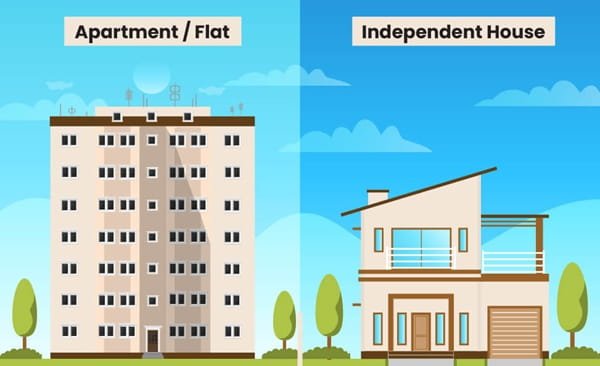
Villa plots along Bangalore’s Sarjapur Road corridor appreciated roughly 35-45% between 2021 and 2024, comfortably outpacing apartment appreciation in the very same stretch of road. The reason is genuinely simple: land is finite, while developers can always build another floor of apartments, keeping apartment supply structurally elastic in a way villa land never is. Yet apartments in the same IT corridors deliver rental yields of 3.5-5%, roughly double what most gated villa communities offer. Understanding exactly which of these two return profiles, appreciation or income, actually suits your investment goal matters more than chasing whichever asset class is currently generating the most buzz.
The Core Investment Trade-Off
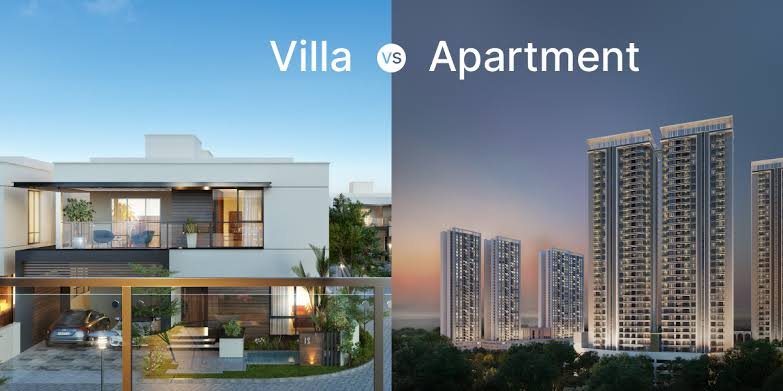
Before diving into specific numbers, it’s worth understanding the fundamental dynamic driving every other comparison in this space, since it explains nearly everything that follows.
- Villas offer stronger capital appreciation over long horizons because land is finite, as cities grow and suburban corridors develop, well-located villa plots tend to increase in value steadily and, in hot corridors, dramatically.
- Apartments offer better rental yield and liquidity, since urban flats attract a considerably broader pool of tenants, rent out faster, and are generally quicker to sell when an investor needs to exit.
- The consistent industry framing across multiple markets is genuinely simple: villas for long-term wealth creation, apartments for income and liquidity.
Rental Yield — Where Apartments Clearly Win
If your investment goal is generating consistent monthly cash flow, the numbers favor apartments decisively, and this gap holds across most major Indian cities.
- Apartments in Bangalore’s IT corridors deliver rental yields of 3.5-5% gross annually, with Whitefield and Electronic City leading at up to 5% for well-located 2BHK units.
- Villas in gated communities typically yield only 2.5-3.5% gross, a meaningful gap that compounds considerably over a multi-year holding period if regular income is your primary objective.
- Tenant placement is also faster for apartments, typically 15-45 days compared to 60-120 days for villas, reflecting the considerably smaller, more specific pool of renters willing to take on a villa’s higher space and maintenance requirements.
- If your main goal is monthly rental returns, apartments consistently outperform, especially in central, IT-focused locations with year-round demand from working professionals.
Capital Appreciation — Where Villas Clearly Win
The flip side of that yield gap is appreciation potential, and here the numbers swing decisively in the villa’s favor over a longer holding period.
- Villas within top corridors like Budigere Cross and Sarjapur Road in Bangalore have appreciated between 40% and 144% over just three years, a genuinely striking range driven almost entirely by underlying land value rather than the structure itself.
- Plots and villa land in high-growth corridors can deliver 14-20%+ annual appreciation, compared to a more moderate 6-10% for apartments in the same broader region.
- A well-chosen villa in an established corridor, combining roughly 8-10% annual appreciation with 2.5-3% rental yield, can deliver a total annual return of 10-13% over a 7-10 year hold, a combination that compares favorably against most fixed-income alternatives and many equity real estate funds.
- Apartments don’t share in this land-driven appreciation the same way, since developers can always add more floors or launch new projects nearby, keeping apartment supply structurally elastic and capping how scarce, and therefore how valuable, any single unit’s underlying land component actually is.
Entry Cost and Down Payment Requirements
Villas demand considerably more capital upfront, a genuine barrier that shapes who can realistically access this asset class in the first place.
- Villas typically require 20-30% higher down payments than comparable apartments, reflecting both the larger physical structure and the underlying land cost baked into the purchase price.
- Villas now command the highest per-square-foot premium of any residential format in several major cities, in Bangalore specifically, villa pricing reached approximately ₹14,700 per square foot as of March 2026, ahead of every other residential category.
- Apartments offer considerably lower entry barriers, giving first-time or moderate-capital investors a more accessible path into real estate without needing the larger upfront commitment a villa purchase requires.
Usable Space Per Rupee Spent
An often-overlooked factor genuinely favors villas once you look past the headline price per square foot.
- A high-rise apartment’s loading factor, the gap between super built-up area and actual usable carpet area, can run 30-40%, meaning a meaningful share of what you’re paying for covers lobbies, lift shafts, and corridors rather than space you actually live in.
- A villa’s loading factor is typically just 15-20%, meaning the usable carpet area you actually get per rupee spent is generally better in a villa than in a comparable apartment purchase.
Maintenance Costs and Ongoing Responsibility
Beyond the purchase price, ongoing costs diverge meaningfully between the two, and this matters for calculating your genuine net return over time.
- Villas usually carry higher maintenance costs due to their independent nature and larger land footprint, while apartments benefit from shared, pooled maintenance costs spread across many units within the same building.
- This ongoing cost difference should genuinely be factored into any net yield calculation, since a villa’s headline appreciation and rental income figures don’t automatically account for the higher recurring upkeep it demands.
Liquidity and Ease of Exit
How quickly and easily you can actually sell the property when you need to matters as much as the returns themselves, and here apartments hold a clear structural advantage.
- Apartments are generally quicker to sell, given their standardized nature and considerably broader buyer pool compared to villas, which appeal to a narrower, more specific segment of buyers.
- Villa plots carry somewhat higher risk around land title clarity, agricultural-to-residential conversion status, and lower overall liquidity, factors that genuinely extend the typical selling timeline compared to a standardized apartment unit.
- Investors with a shorter investment horizon or a genuine need for cash flow are generally better served by apartments, given this liquidity advantage alongside their stronger rental yield.
Who Each Option Genuinely Suits
Beyond pure numbers, certain buyer profiles are structurally better matched to one asset class over the other.
- Villas suit HNI, UHNI, or senior professionals for whom lifestyle quality and privacy outweigh pure location convenience, as well as multi-generational families needing genuine spatial zoning, a G+1 villa format naturally accommodates grandparents on the ground floor and parents and children above, with a private garden included.
- Apartments suit NRIs returning to India expecting international-standard, professionally managed community living, and investors prioritizing steady monthly income or shorter investment cycles over long-horizon wealth building.
- A genuinely balanced portfolio often combines both over time, many experienced Bangalore investors specifically hold apartments for cash flow and liquidity alongside villa plots for long-term, land-driven appreciation.
The Bottom Line
Villas and apartments serve fundamentally different investment purposes rather than one being universally superior, villas offer stronger long-term capital appreciation driven by finite land supply, better usable space per rupee, and genuine legacy value, at the cost of higher entry capital, higher maintenance, and considerably lower liquidity, while apartments offer stronger rental yield, faster tenant placement, easier resale, and lower entry barriers, at the cost of missing out on the land-driven appreciation villas can deliver. The right choice genuinely depends on your investment horizon and priority, apartments for income, liquidity, and shorter cycles; villas for long-term wealth creation and legacy, provided you can absorb the higher upfront capital and longer holding period villas typically require. This is general informational content, not personalised investment advice; consulting a real estate adviser about your specific city, corridor, and financial goals remains genuinely worthwhile before committing to either asset class.
Frequently Asked Questions
Q1. If villas appreciate so much more than apartments, why do so many investors still choose apartments?
A: Because apartments deliver considerably stronger rental yield (3.5-5% versus 2.5-3.5% for villas), faster tenant placement, and considerably easier resale liquidity, making them genuinely better suited for investors prioritizing steady monthly income or a shorter investment horizon over the longer, land-driven appreciation villas typically require years to realize.
Q2. Do villas genuinely require more capital to enter than apartments in the same city?
A: Yes, villas typically require 20-30% higher down payments than comparable apartments, and in cities like Bangalore, villas now command the highest per-square-foot price of any residential format, meaning the entry barrier for villa investment is genuinely higher than for a comparable apartment purchase.
Q3. Is a villa’s higher price per square foot actually justified by more usable space?
A: Often yes, apartments can carry a loading factor of 30-40% between super built-up and actual usable carpet area, covering shared lobbies and lift shafts, while villas typically carry a lower 15-20% loading factor, meaning the genuine usable space per rupee spent tends to be better in a villa despite its higher headline price.
Q4. Which option is better specifically for a multi-generational family investing for long-term family use rather than pure returns?
A: Villas are generally considered significantly better suited for multi-generational families, since the G+1 format allows for natural generational zoning, grandparents on the ground floor and parents and children above, along with private outdoor garden space, an arrangement apartment living simply cannot replicate.