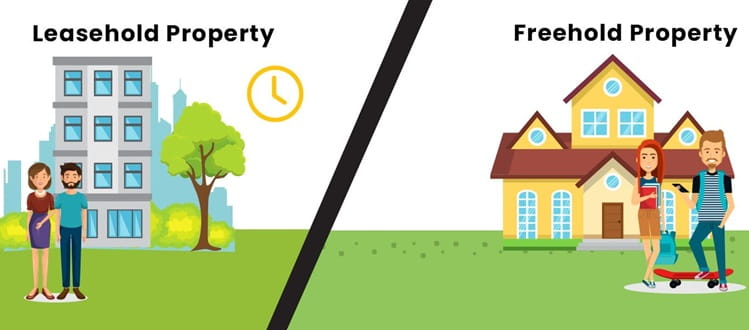
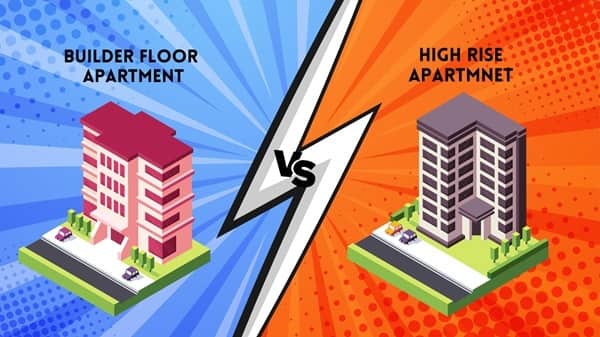
In most Indian cities, flats typically run ₹5,000-15,000+ per square foot, while independent houses often cost ₹8,000-25,000+ per square foot, since buyers are paying for the underlying land as well as the structure itself. That price gap alone explains why this remains one of the most consequential decisions Indian homebuyers face in 2026, and why there’s genuinely no single right answer, it depends on your budget, family size, how much maintenance responsibility you want, and whether you’re prioritizing liquidity or long-term land appreciation. Understanding exactly where each option wins requires looking past the brochure and into how you’ll actually live day to day.
The Core Structural Difference
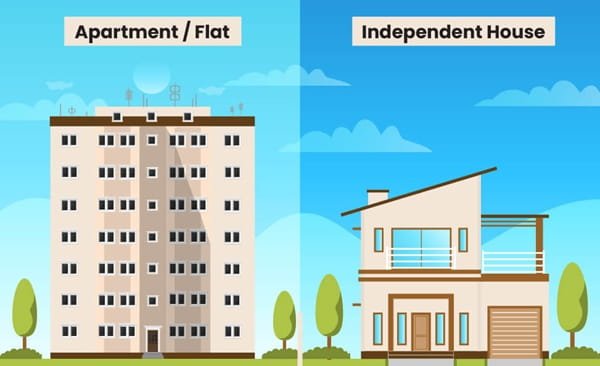
Before comparing costs and lifestyle trade-offs, it’s worth being precise about what each option actually gives you ownership of, since that difference shapes nearly everything that follows.
- An apartment (flat) is a unit within a larger multi-storey building, sharing walls, common facilities, and infrastructure with dozens or hundreds of other households, with maintenance typically handled centrally by a Resident Welfare Association or the builder.
- An independent house sits on its own individual plot of land, giving the owner complete ownership of both the structure and the land beneath it, with no shared walls and no communal decision-making structure governing renovations or design.
- The homeowner of an independent house can plan and design the property according to their own preferences if built from scratch, and can use front and rear setbacks to accommodate a private lawn or dedicated parking, options simply unavailable within a standardized apartment unit.
Cost — Why Independent Houses Command a Genuine Premium
Price is usually the first thing buyers compare, and the underlying reason for the gap matters as much as the number itself.
- Independent houses generally cost more per square foot than apartments in the same broader area, since the price reflects both the structure and full land ownership, whereas an apartment’s price reflects only a proportional, shared claim on the underlying land.
- This isn’t purely a “houses are more expensive” story, it reflects a genuine trade-off, land historically appreciates over time, particularly in expanding cities, giving independent house buyers a structurally different long-term asset than apartment buyers hold.
- JLL data shows apartments priced at ₹1 crore and above recorded 4% year-on-year growth in sales during the first nine months of 2025, even as overall unit sales declined 12%, showing genuine continued demand at the premium end of the apartment segment specifically.
Maintenance and Day-to-Day Responsibility
How much ongoing effort a property demands from its owner genuinely differs between these two formats, and it’s a factor many buyers underweight until they’re actually living with the consequences.
- Apartments are generally cheaper to maintain and use, with maintenance handled communally through monthly charges covering security, cleaning, power backup, and shared facility upkeep, a considerably lower-effort ownership experience.
- Independent houses put full maintenance responsibility on the owner, bearing all costs associated with infrastructural upkeep and taking on complete responsibility for security infrastructure, since there’s no RWA or builder managing these tasks on your behalf.
- For buyers who genuinely don’t want to be bothered by ongoing technical or maintenance hassles, this single factor alone often tips the decision firmly toward an apartment.
Privacy and Space — Where Independent Houses Clearly Win
For families specifically prioritizing personal space and freedom from shared-living friction, independent houses offer something apartments structurally cannot replicate.
- No shared walls, no footsteps overhead, no late-night furniture-dragging noise from a neighbour, a genuinely meaningful quality-of-life difference that many homeowners describe as worth the investment on its own.
- Owners can renovate, expand, redesign, or rebuild whenever they want, subject to local building regulations, a rooftop garden, an extra floor, or a home office extension are all genuinely possible in a way an apartment’s fixed layout and society bylaws simply don’t permit.
- This makes independent houses particularly well-suited to larger families needing more space and flexibility than a standardized apartment layout can accommodate.
Liquidity and Resale — Where Apartments Generally Win
Beyond day-to-day living, how easily you can eventually sell the property is a genuinely important, and often overlooked, factor in this decision.
- Apartments are better for quick resale, easier financing, and lower decision fatigue for buyers, since standardized units in an active building or locality attract a considerably broader, more liquid pool of interested buyers.
- Independent houses work well for land appreciation and customization, but are comparatively low on liquidity, since resale depends heavily on that specific plot’s location, condition, and buyer-specific preferences, a smaller, more particular pool of interested purchasers than a standardized flat draws.
- Independent houses command higher absolute rental amounts but may experience longer vacancy periods and a more limited tenant pool, while the higher maintenance responsibility involved can deter some potential renters even as it attracts families specifically seeking privacy and space.
Rental Income Potential
For buyers considering the property partly as an income-generating asset, the two formats perform meaningfully differently.
- Apartments typically generate higher rental yields due to strong tenant demand for managed living environments, urban locations, and amenities, with the standardized nature of apartment units appealing to a genuinely broad tenant base including young professionals and nuclear families.
- Independent houses attract a narrower but often more committed tenant base, families specifically seeking privacy and space, though the trade-off is potentially longer vacancy periods between tenants given the smaller pool of renters willing to take on an independent house’s typically higher maintenance involvement.
Security Considerations
Physical safety concerns genuinely differ between the two living formats, and this matters considerably for families with children or elderly members.
- Apartments in gated communities generally offer more secure, communally supported living, with round-the-clock guards, CCTV, and shared vigilance among neighbours contributing to overall safety.
- Independent houses place security responsibility entirely on the owner, requiring the household to independently arrange and fund whatever security measures, gates, cameras, alarm systems, they consider necessary, without any shared infrastructure to lean on.
- Community living itself contributes a softer security benefit too: whether in a standalone building or a large gated development, apartment living tends to encourage close-knit community bonds and mutual care between neighbours, a genuinely valuable, if less tangible, form of everyday safety.
Practical Factors Worth Weighing Before You Decide
Beyond the broad categories above, the actual decision genuinely comes down to three specific questions worth asking honestly before committing either way.
- Your time horizon: apartments suit buyers wanting a straightforward, liquid asset they might sell within a decade; independent houses suit buyers with a genuine 15-year-plus vision built around land appreciation and long-term settlement.
- How much maintenance you’re prepared to handle: apartments hand this responsibility to a managed structure; independent houses require the owner to take it on directly, in exchange for full control.
- How quickly you might need to sell: apartments offer considerably faster, easier resale given their broader buyer pool; independent houses trade that liquidity for potentially stronger long-term land-driven appreciation.
When an Independent House Is Genuinely the Better Choice
- You have a large family needing more space and layout flexibility than a standardized flat provides.
- You want full ownership of land itself, with genuine long-term appreciation potential tied to that land.
- You value privacy and complete freedom to customize or expand your home over time, subject to local regulations.
- You have a genuine 15-year-plus holding horizon and aren’t prioritizing quick resale liquidity.
When an Apartment Is Genuinely the Better Choice
- You want affordability, low maintenance, and modern amenities without taking on independent upkeep responsibility.
- You prioritize quick resale and easier financing, given the broader, more liquid buyer pool for standardized units.
- You value community living, shared security, and managed infrastructure over full independence.
- You’re a first-time buyer or NRI investor wanting a lower-diligence, more straightforward purchase process.
The Bottom Line
Neither independent houses nor apartments are universally better, independent houses offer privacy, space, full land ownership, and stronger long-term appreciation potential at the cost of higher upfront price, full maintenance responsibility, and considerably lower liquidity, while apartments offer affordability, managed convenience, stronger resale liquidity, and community-supported security at the cost of shared living and no direct land ownership. The right choice genuinely comes down to your specific time horizon, how much hands-on responsibility you want, and whether you’re optimizing for quick resale flexibility or long-term, land-driven wealth building, provided either property carries a clear title and meets all applicable regulatory requirements. This is general informational content, not personalised financial or legal advice; consulting a real estate adviser about your specific budget, family needs, and city remains genuinely worthwhile before committing to either option.
Frequently Asked Questions
Q1. Why do independent houses generally cost more per square foot than apartments in the same area?
A: Because the price reflects full ownership of both the structure and the underlying land, while an apartment’s price reflects only a proportional, shared claim on the land beneath the larger building, and since land historically appreciates over time, especially in expanding cities, this land ownership component is genuinely priced into the independent house premium.
Q2. Is it genuinely harder to sell an independent house compared to an apartment when the time comes?
A: Generally yes, apartments benefit from a broader, more standardized buyer pool and typically offer faster, easier resale, while independent houses appeal to a narrower, more specific set of buyers based on that particular plot’s location and condition, making liquidity a genuine trade-off for the land appreciation and privacy independent houses offer.
Q3. Which option generates better rental income if I’m buying primarily as an investment?
A: Apartments typically generate higher rental yields due to strong tenant demand from young professionals and nuclear families seeking managed, amenity-rich living, while independent houses can command higher absolute rent from families specifically wanting privacy and space, but often face longer vacancy periods given their smaller, more particular tenant pool.
Q4. Is an apartment automatically the safer choice for a family with young children or elderly members?
A: Apartments in gated communities generally offer stronger built-in security through round-the-clock guards, CCTV, and community vigilance, but a well-secured independent house with the owner’s own security arrangements can be equally safe, the key difference is that apartment security is shared and centrally managed, while independent house security depends entirely on what the individual owner chooses to invest in.