You can buy the ground and first floor of a builder floor for parents and children to live separately but together, with separate entrances, private spaces, and shared access, an arrangement no apartment society in India allows. That single detail sums up why the builder-floor-versus-apartment decision looks genuinely different once you’re evaluating it specifically for family life rather than pure investment returns. Security for young children, community for socializing families, privacy for joint households, and accessibility for elderly parents all pull in different directions, and understanding exactly which format serves which family need matters more than chasing whichever option happens to be trending in your city.
What Each Option Actually Offers a Family
Before weighing the trade-offs, it’s worth being clear about what these two formats structurally provide, since the difference shapes every family-specific consideration that follows.
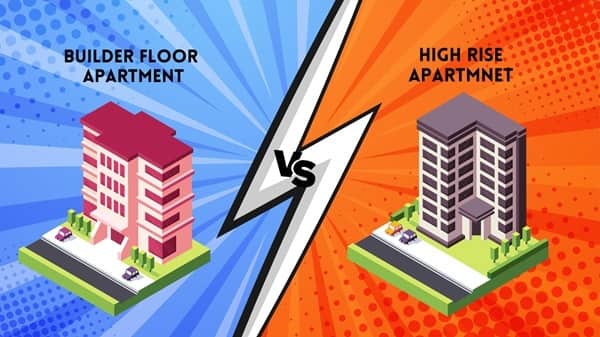
- A builder floor is a low-rise independent unit occupying an entire floor of a 2-4 storey building, giving each family a private, exclusive living experience closer to an independent house, without sharing walls, floors, or common spaces with dozens of other households.
- An apartment is one unit inside a large, multi-storey gated society, typically home to hundreds of families sharing common amenities, elevators, security, power backup, clubhouse, and play areas, all managed centrally by a Resident Welfare Association or the builder.
- The fundamental trade-off is genuinely simple to state, even if the actual decision isn’t: builder floors emphasize privacy and ownership, apartments emphasize shared convenience and managed community living.
Security — Where Apartments Clearly Win
For most families, particularly those with young children or elderly members at home, physical security is often the single deciding factor, and this is an area where the two formats diverge sharply.
- Apartments generally offer 24/7 security with CCTV surveillance, guards, visitor logs, and round-the-clock facility teams, a major comfort specifically for families with children or elderly residents who need reliable, consistent oversight of who enters the building.
- Builder floors may or may not have gated security, in many low-rise clusters, family safety depends heavily on the surrounding neighbourhood and whatever independent measures the individual owner chooses to install themselves.
- This is genuinely one area where apartments win hands down for families prioritizing consistent, professionally managed safety over the alternative of arranging and paying for private security independently.
Amenities and Kid-Friendly Spaces
Beyond pure security, the day-to-day lifestyle amenities available to children specifically tend to favor one format considerably over the other.
- Apartment societies offer playgrounds, activity rooms, and safer communal spaces for kids to play under supervision, a genuinely strong plus for young families whose children benefit from having peers nearby and structured play areas within the same complex.
- From clubhouses and gyms to swimming pools, apartments come packed with modern-day conveniences that builder floors rarely offer as shared facilities.
- Builder floors provide minimal shared amenities, mostly just staircases or parking, meaning families choosing this format generally need to arrange recreational activities and social interaction for children outside the immediate building.
Community and Social Life for Families
Beyond physical amenities, the intangible sense of belonging and social connection genuinely differs between these two living formats, and it matters considerably to many families.
- Apartments are great for families who enjoy social life, festivals, events, and a genuine sense of belonging, weekend clubhouse events, children making friends in the society park, and neighbours who become a familiar, extended community over time.
- Builder floors suit families who prefer peace, privacy, and fewer neighbours, a genuinely valid preference for households that would rather control their own social calendar than participate in a managed community structure.
- One property adviser’s framing captures this well: “know what you’re optimising for, that clarity makes this decision easy.”
The Genuine Case for Builder Floors in Joint Family Arrangements
This is where builder floors offer something structurally unique that apartments simply cannot replicate, and it’s a genuinely important consideration for India’s many multi-generational households.
- You can buy the ground and first floor specifically for parents and children to live separately but together, with their own separate entrances, private living spaces, and shared access between floors, an arrangement that preserves both independence and proximity in a way no apartment society permits.
- This makes builder floors particularly ideal for joint families who want genuine autonomy for each generation while still living within the same building and staying closely connected day to day.
- No apartment society allows this kind of dual-family ownership and access arrangement, since apartment units are sold and managed as individual, separate flats within a much larger shared structure.
Considerations Specifically for Elderly Family Members
Family living decisions often need to account for ageing parents or grandparents, and the two formats present genuinely different trade-offs on this front.
- Low-rise builder floors with fewer stairs, or units on the ground or first floor specifically, can be more senior-friendly, provided the family isn’t sacrificing proximity to medical facilities and adequate security in the process.
- Apartment complexes with elevator access remove the stair-climbing concern entirely, a genuine advantage for elderly residents in a high-rise setting, combined with the same round-the-clock security benefiting the whole family.
- For both older and younger family members, proximity to schools, hospitals, and parks ultimately matters more than the dwelling type itself, making location selection just as important as the builder-floor-versus-apartment choice.
Maintenance Responsibility and Ongoing Costs
Family life comes with enough ongoing responsibilities already, and how much additional maintenance burden a property adds is a genuinely practical consideration worth weighing.
- Living in an apartment means paying a monthly maintenance charge, covering cleaning, security, power backup, and shared facility upkeep, giving families a hands-off, managed living experience in exchange for that recurring cost.
- In builder floors, you either manage everything on your own or hire local help, giving families more direct financial control over spending but also considerably more personal responsibility for day-to-day upkeep.
- Monthly CAM (Common Area Maintenance) charges in premium apartment societies can run into a genuinely significant recurring cost, sometimes several thousand rupees monthly plus applicable GST, worth factoring into your long-term family budget alongside the property’s purchase price.
How Modern Builder Floors Have Narrowed the Amenity Gap
It’s worth noting this comparison has genuinely evolved in recent years, and treating builder floors as automatically amenity-free no longer reflects the current market accurately.
- Modern luxury builder floors increasingly include smart home automation, EV charging points, lift access within the building, and modular kitchens, features that were largely exclusive to apartment societies just a few years ago.
- The trade-off between privacy and amenities that once clearly favored apartments is considerably less pronounced today, meaning families evaluating newer builder-floor projects specifically shouldn’t assume they’re sacrificing all modern convenience for independent living.
When a Builder Floor Is Genuinely the Better Choice for a Family
- You’re a joint or multi-generational family wanting separate floors with independent entrances while staying closely connected.
- You prioritize privacy and space over shared community amenities and social events.
- You’re willing to personally manage or independently arrange security and maintenance, rather than relying on a managed RWA structure.
- You’re buying in a premium, established locality where builder floors already have a strong resale track record.
When an Apartment Is Genuinely the Better Choice for a Family
- You have young children who would benefit from supervised play areas, peer groups, and a built-in social community.
- You have elderly family members who’d benefit from elevator access and consistent, round-the-clock professional security.
- You want a hands-off, managed living experience without taking on independent maintenance and security responsibility yourself.
- You value community, festivals, and shared events as a meaningful part of your family’s day-to-day lifestyle.
The Bottom Line
For families specifically, this decision genuinely comes down to what you’re optimizing for: apartments deliver structured security, kid-friendly communal spaces, and a genuine sense of community that particularly benefits young children and elderly members, while builder floors deliver privacy, space, and a uniquely flexible option for joint families wanting generational independence under one roof, an arrangement no apartment society can replicate. Neither format is universally better for every family, a household with young kids prioritizing supervised play and consistent security will likely lean apartment, while a joint family wanting separate-but-connected living, or households simply valuing privacy over shared amenities, will likely find a builder floor genuinely better suited to their needs. This is general informational content, not personalised financial or legal advice; verifying RERA registration, clear title records, and the builder’s past delivery track record remains genuinely essential before purchasing either type of property.
Frequently Asked Questions
Q1. Are builder floors genuinely unsafe for families with young children compared to apartments?
A: Not inherently unsafe, but apartments generally offer more consistent, professionally managed security through gated entry, CCTV, and 24/7 guards, while builder floor safety depends considerably more on the surrounding neighbourhood and whatever independent security measures the individual owner installs, so families prioritizing consistent oversight should factor this difference in carefully.
Q2. Can a joint family genuinely live independently yet together in an apartment the way they can in a builder floor?
A: Not in the same way, apartment societies sell and manage individual flats as separate units without the ability to combine adjoining floors with independent entrances the way a builder floor allows, making builder floors the structurally better option specifically for joint families wanting generational independence within one connected property.
Q3. Do modern builder floors still lack amenities like swimming pools and clubhouses compared to apartments?
A: Increasingly less so, while apartments still generally offer more extensive shared amenities as standard, modern luxury builder floors have started including features like smart home automation, EV charging, and in-building lift access, meaning the amenity gap that once clearly favored apartments has narrowed considerably in recent years.
Q4. Which option is genuinely better for a family with elderly parents at home?
A: It depends on mobility needs, apartments with elevator access remove concerns about stair-climbing while offering consistent security, but a ground or first-floor unit in a low-rise builder floor can be equally senior-friendly, provided the family ensures adequate proximity to medical facilities and doesn’t compromise on security arrangements either way.