On an ₹80 lakh under-construction property, GST alone adds ₹4 lakh, money that adds zero value to your actual home. Buy the same unit ready-to-move with an Occupancy Certificate instead, and that entire amount stays in your pocket. Yet over 60% of new homebuyers in India still choose under-construction properties anyway, drawn by prices that run 10-20% lower and payment plans that don’t demand the full amount upfront. Understanding exactly where each option genuinely wins requires running the complete numbers, not just comparing the sticker price on a brochure.
What Each Option Actually Means
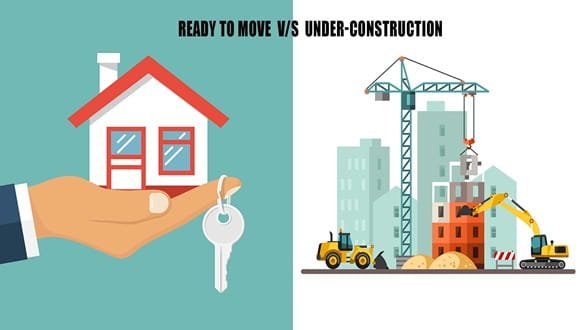
A ready-to-move property and an under-construction property represent two fundamentally different purchase experiences, not just two price points on the same product.
- A ready-to-move (RTM) property is fully completed, has typically received its Occupancy Certificate (OC), and is available for immediate possession, letting buyers physically inspect the actual unit, construction quality, and surroundings before committing.
- An under-construction (UC) property is still being built, sold based on brochures, sample flats, and floor plans, with possession typically delivered 24-36 months after booking.
- Over 60% of new homebuyers currently opt for under-construction properties, drawn specifically by the lower entry price and flexible, staggered payment plans tied to construction milestones rather than a single large upfront sum.
The GST Difference — A Genuinely Major Cost Factor
Tax treatment is where these two property types diverge most sharply, and it’s a cost most buyers only discover after they’ve already fallen in love with a floor plan.
- Under-construction properties attract 5% GST on non-affordable housing and 1% GST on affordable housing (units priced up to ₹45 lakh with carpet area under 60 square metres), neither with input tax credit passed to the buyer.
- Ready-to-move properties with a valid Occupancy Certificate are completely exempt from GST, since Schedule III of the CGST Act treats a finished building as immovable property rather than a taxable service.
- On an ₹80 lakh under-construction property, this GST alone adds roughly ₹4 lakh to your total cost, a substantial figure many buyers overlook when comparing only the quoted base price against a finished unit.
- The Occupancy Certificate is effectively the “tax-trigger” document in Indian real estate, before it’s issued, GST applies; the moment it’s granted, that same physical unit becomes GST-exempt going forward.
Why the “Cheaper” Under-Construction Price Doesn’t Always Win
A lower headline price is exactly what draws most buyers toward under-construction units, but that discount doesn’t always survive a proper total-cost comparison.
- Under-construction units typically carry a 10-20% lower base price than a comparable finished flat in the same micro-market, and in most cases this gap outweighs the 1-5% GST charged along the way.
- However, running the full comparison sometimes flips this outcome: a buyer paying 5% GST on a lower base price can occasionally end up spending more in total outlay than a buyer paying zero GST on a higher-priced ready equivalent, depending on the exact price gap involved.
- In Bangalore’s current market specifically, factoring in GST plus 2-3 years of carrying costs, rent paid while waiting, plus pre-EMI loan interest, can meaningfully narrow or even erase the apparent under-construction discount entirely.
- Total outflow for property purchases generally runs 15-25% higher than the quoted price once GST, stamp duty, registration, interior costs, and moving expenses are all added, regardless of which property type you choose.
Genuine Advantages of Buying Under-Construction
Beyond the lower headline price, under-construction purchases offer several structural benefits that ready-to-move units simply can’t replicate.
- Lower entry price: you lock in today’s price for a home delivered 24-36 months later, and in cities with steady historical appreciation, like Mumbai, this can mean the property is worth considerably more by the time it’s completed.
- Staggered, RERA-mandated payment slabs: you don’t need the full amount upfront, payments follow construction progress, roughly 10% at the plinth stage, 10% at the first slab, and so on, considerably easier on monthly cash flow than a lump-sum purchase.
- First choice of inventory: buying early lets you select the exact unit you want, a specific floor, orientation, or view, options often already sold out by the time a project nears completion.
- Modern construction standards: under-construction projects in 2026 are increasingly built to the latest safety norms and frequently include smart-home wiring that many older, already-completed buildings weren’t designed with.
- Stronger appreciation potential in emerging corridors: UC properties in developing areas like Thane, Panvel, and Navi Mumbai have shown 12-18% annual appreciation, compared to roughly 6-10% for RTM properties in more saturated zones.
Genuine Advantages of Buying Ready-to-Move
For buyers prioritizing certainty over upside, ready-to-move properties offer several advantages that directly address under-construction’s biggest weaknesses.
- Zero GST, saving lakhs instantly compared to an equivalent under-construction unit, as illustrated by the ₹4 lakh saved on an ₹80 lakh purchase.
- Zero possession anxiety: there’s no waiting and no risk of delay, you simply sign, pay, and move in, a genuinely different experience from tracking a builder’s construction milestones for years.
- Immediate rental income: for investors, rental yield begins from day one, with Mumbai’s ready-to-move yields averaging roughly 3-4% in 2026, compared to zero income throughout an under-construction property’s entire build period.
- Full physical verification before purchase: you can inspect ventilation, natural light, water pressure, and actual construction quality directly, with no surprises hiding behind a brochure rendering.
Risk Factors Genuinely Worth Weighing
The trade-off for under-construction’s lower price and flexibility is real, measurable risk that ready-to-move buyers simply don’t carry.
- Under-construction projects carry genuine risk of delays, changes to the final layout or specifications compared to what was marketed, and potential issues with the developer’s financial stability.
- Always verify RERA registration and the builder’s track record before committing to an under-construction purchase, since this remains your primary legal safeguard against delivery risk.
- Ready-to-move properties carry considerably lower risk overall, since you can inspect the actual unit, verify construction quality directly, and confirm the surrounding neighbourhood before finalizing your decision.
Home Loan Considerations for Both Options
Financing structure differs meaningfully between the two, and it’s worth understanding before you commit to either path.
- Banks and financial institutions offer home loans for both property types, but disbursement structure genuinely differs between them.
- For under-construction properties, loan disbursement happens in stages, tied directly to construction progress, meaning you’ll typically pay pre-EMI (interest only) on the disbursed portion until the full loan releases at possession.
- For ready-to-move properties, the full loan amount is generally disbursed at once, and full EMI payments begin immediately, a more straightforward repayment structure from day one.
When Ready-to-Move Is Genuinely the Better Choice
- You need a home soon, or want to avoid the uncertainty of waiting years for possession.
- You’re specifically seeking immediate rental income as an investor.
- You prioritize certainty and reduced risk over potential appreciation, wanting to inspect the actual property before committing.
- You want to avoid GST entirely and are comfortable paying a somewhat higher base price for that tax exemption and immediate possession.
When Under-Construction Is Genuinely the Better Choice
- You can wait 2-3 years or longer for possession without financial strain from carrying both rent and pre-EMI simultaneously.
- You’re seeking better long-term appreciation potential, particularly in emerging growth corridors within your city.
- You want flexible, staggered payment plans tied to construction milestones rather than a large upfront commitment.
- You’ve thoroughly verified the project’s RERA registration and the developer’s delivery track record, genuinely reducing the risk of delays or quality issues.
The Bottom Line
Ready-to-move properties offer certainty, immediate possession, zero GST, and instant rental income, making them the safer choice for end-users wanting peace of mind or investors prioritizing immediate cash flow, while under-construction properties offer lower entry prices, flexible payment plans, and stronger appreciation potential in emerging areas, but come with genuine waiting time, construction risk, and GST costs that can sometimes erase the apparent savings once you calculate the full total outlay. The right decision genuinely depends on your specific timeline, budget, and risk tolerance, making it essential to run the complete cost comparison, not just the headline price, before committing either way. This is general informational content, not personalised financial or legal advice; always verify a project’s RERA registration and the builder’s delivery track record before finalizing your purchase.
Frequently Asked Questions
Q1. Is the lower base price of an under-construction property always the better financial deal once GST is factored in?
A: Not always, while under-construction units typically cost 10-20% less than comparable ready-to-move flats, and this gap usually outweighs the 1-5% GST charged, in some cases a buyer paying zero GST on a ready-to-move property ends up spending less in total outlay than one paying GST plus carrying costs on a cheaper under-construction unit, so it’s worth running the full comparison for your specific project.
Q2. Does RERA registration guarantee my under-construction flat will actually be delivered on time?
A: RERA registration provides genuine legal accountability and requires developers to disclose project timelines and specifications, but it doesn’t guarantee on-time delivery outright, verifying the specific builder’s historical track record of on-time completions remains equally important alongside checking RERA registration status.
Q3. Can I avoid paying GST on an under-construction property through any legal means?
A: No, GST is mandatory on under-construction properties unless the project is fully completed and has received its Occupancy Certificate, at which point it’s classified as ready-to-move and becomes GST-exempt, so the only way to avoid this tax is to wait and purchase the unit after completion.
Q4. If I’m buying purely as an investment rather than to live in, which option genuinely makes more sense?
A: It depends on your investment goal, if you want immediate rental income and lower risk, ready-to-move properties in prime locations typically deliver 3-4% rental yields right away, while if you’re prioritizing long-term capital appreciation and can absorb 2-3 years without any returns, a carefully vetted under-construction property in an emerging growth corridor may offer considerably stronger appreciation potential over time.