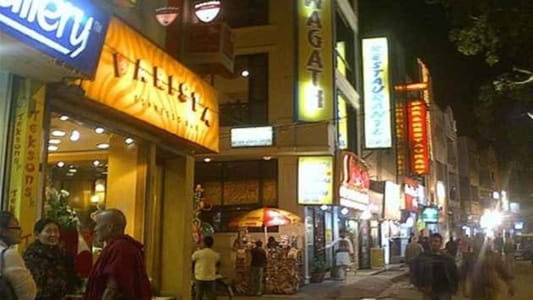
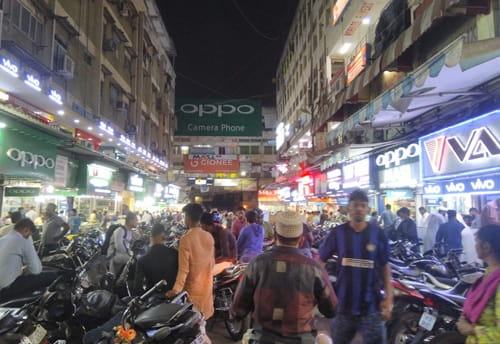
South Kolkata has a different personality from the heritage-dense north of the city. The neighbourhoods here — Ballygunge, Hindustan Park, Ekdalia, Deshapriya Park — carry a particular combination of old Bengali intellectual culture and contemporary middle-class life. Gariahat Market sits at the crossing of Gariahat Road and Rashbehari Avenue, which is the commercial and social crossroads of this part of the city. This is the market that South Kolkata comes to for sarees, for jewellery, for Kathi rolls and fish cutlets, for daily vegetables and festival shopping, and for the particular pleasure of browsing a street market that has been doing exactly this for generations.
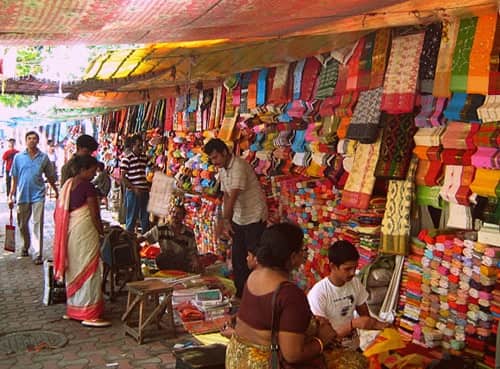
The market is sometimes called Triangular Park after the small green triangle at the road junction it surrounds. It is not a market in the conventional sense of a bounded physical structure — it is a long, live stretch of Gariahat Road and Rashbehari Avenue, lined with permanent shops on the ground floors of buildings, temporary stall vendors filling the pavement, and the general energy of a commercial street that functions as South Kolkata’s default gathering point.
Quick Overview: Gariahat Market Kolkata
| Detail | Information |
| Location | Rash Behari Avenue, Ekdalia, Ballygunge, Kolkata – 700019 |
| Also Known As | Triangular Park Market |
| Area | South Kolkata, Ballygunge |
| Market Type | Open street market and commercial strip |
| Timings | 10:00 AM – 8:30 PM (permanent shops); street stalls until 9:00 PM or later |
| Weekly Off | No fixed weekly off; some shops closed on Tuesdays |
| Nearest Metro | Kalighat Metro Station, Kolkata Metro Line 1 (~10 min walk) |
| Known For | Bengal cotton sarees, Tant sarees, gold jewellery, Kathi rolls, ethnic wear |
| Parking | Extremely limited; buses and metro recommended |
Where Exactly Is Gariahat Market
Gariahat Market is located at the junction of Gariahat Road and Rashbehari Avenue in Ekdalia, Ballygunge, South Kolkata, pin code 700019. The full address most commonly cited is Rash Behari Avenue, Gariahat Market, K.M.C., Kolkata, West Bengal 700019. The market extends along both roads from this central junction, with the commercial stretch covering a significant length in both directions.
The nearest metro station is Kalighat on Kolkata Metro Line 1 (the North-South corridor), approximately a 10-minute walk from the market junction. The Kalighat station connects directly toward Esplanade and Dum Dum in the north and Kavi Subhash in the south. Most Kolkata bus routes pass through or near Gariahat — it is one of the city’s major bus hubs, making it reachable from virtually any part of the city without a transfer. Parking is essentially non-existent in the immediate market area given the volume of traffic at this junction — public transport is the only practical approach.
The market’s spread of approximately 25 sq km in terms of the commercial zone it anchors makes the Gariahat area genuinely large, encompassing not just the junction market itself but the entire Rashbehari Avenue stretch up to Deshapriya Park and beyond.
What Shops You Will Find
Bengal sarees are the category for which Gariahat is most visited from across the city and from outside it. Tant sarees — the fine handloom cotton sarees of West Bengal — Murshidabad silk, Kantha stitch sarees, Muslin Jamdani work, and Baluchari silk are available from dedicated specialist shops at both wholesale and retail pricing. Benarasi Kuthi, India Silk House, Mabesha, Weavers Studio, and Kanishka are among the well-known names on Rashbehari Avenue dealing in high-quality handloom sarees for the bridal and premium market. These shops draw buyers from Bengali families across India who specifically come to Gariahat for authentic, quality sarees ahead of weddings and major festivals.
Gold jewellery is the market’s second major draw. Kolkata has a strong tradition of fine gold work, and the jewellery shops around Gariahat carry a range from traditional Bengali designs — shakha-pola sets, gold temple jewellery, and bridal sets — to contemporary gold and diamond combinations. Families from the Ballygunge and Bhowanipore residential zones maintain multi-generational relationships with specific jewellers here.
Clothing beyond sarees covers kurtis, salwar suits, dresses, jeans, and casual wear from permanent shops and pavement stalls. The street stalls operate on bargaining; the established shops carry fixed prices but occasionally negotiate on volume. Electronics, home décor, footwear, bags, accessories, and cosmetics fill the lanes branching off the main market road. The market also has shops selling traditional puja items, flower garlands, incense, and festival decoration materials — particularly active during Durga Puja, which transforms the entire Gariahat area into Kolkata’s most vibrant festive zone outside of the large marquee pandals.
Priya Cinema and Mukti Cinema, both in the Gariahat area, make the market zone also an entertainment destination — film-goers regularly combine a movie with market shopping and food on the same outing, a pattern that has been part of South Kolkata’s social routine for decades.
Food at Gariahat Market
Kathi rolls are the Gariahat food signature. The egg rolls, chicken rolls, and mutton rolls from establishments like Bedwin along the market strip are among the most cited in Kolkata — a city that takes its Kathi roll tradition very seriously and has strong opinions about where the best ones are made. Fish cutlets, chops, and other Bengali snacks fill the street food stalls through the afternoon and evening. Bancharam’s sweet shop is specifically known for its nolen gur (date palm jaggery) mishti and talsaash sandesh — seasonal specialties that draw queues in winter. Hatari and Krystal Chopstiks are among the sit-down eating options for those wanting a full meal between shopping.
Nearby Areas Worth Visiting
Deshapriya Park — a well-maintained green space in South Kolkata — is within easy walking distance. Kalighat Kali Temple, one of the 51 Shakti Peethas and one of the most important temples in West Bengal, is approximately a kilometre away via Kalighat Metro Station. Rabindra Sarobar, a large artificial lake surrounded by walking tracks and morning exercise spaces, is nearby. Quest Mall, South City Mall, and the upscale Hindustan Park and Ballygunge Circular Road residential zones are all accessible within the same South Kolkata stretch.
FAQs
Q1. What is Gariahat Market Kolkata famous for?
A: Gariahat is best known as South Kolkata’s premier shopping destination — particularly for Bengal cotton sarees (Tant, Murshidabad silk, Jamdani), gold jewellery in traditional Bengali designs, Kathi rolls, and Bengali sweets. It is also the cultural and social crossroads of the Ballygunge-Ekdalia neighbourhood during Durga Puja season.
Q2. What are the timings of Gariahat Market Kolkata?
A: Permanent shops generally operate from 10:00 AM to 8:30 PM. Street stalls tend to trade until 9:00 PM or later. There is no fixed weekly off for the market as a whole, though individual shops may close on Tuesdays.
Q3. Which metro station is nearest to Gariahat Market?
A: Kalighat Metro Station on Kolkata Metro Line 1 is the closest, approximately a 10-minute walk from the Gariahat junction. Most Kolkata bus routes also pass through or near Gariahat, making it one of the most bus-accessible markets in South Kolkata.
Q4. Is Gariahat good for bridal saree shopping?
A: Yes. Gariahat and the adjacent Rashbehari Avenue have a strong cluster of specialist saree shops — Benarasi Kuthi, India Silk House, Mabesha, Weavers Studio — that carry authentic handloom Bengal sarees, bridal silk, and Jamdani work. It is one of the primary destinations for Bengali bridal saree shopping both locally and for families visiting from outside Kolkata.
Q5. When is the best time to visit Gariahat Market?
A: Weekday mornings between 10:00 AM and 1:00 PM are the least crowded and most comfortable for browsing. Evenings from 5:00 PM onwards are the most active, particularly on weekends. The weeks before Durga Puja — typically October — see the market at its most energetic and most decorative, though also its most crowded.