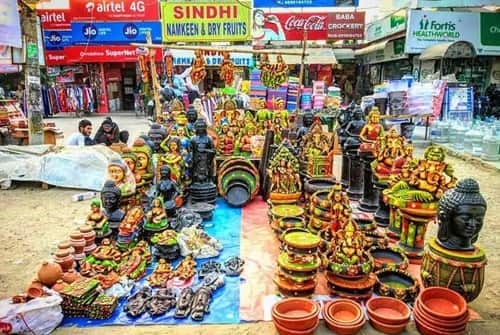
There are markets that operate as commerce and markets that operate as spectacle. Gudimalkapur Flower Market is both. By 4 AM, when most of Hyderabad has hours of sleep still ahead of it, the flower market near Mehdipatnam is already in full operation — hundreds of vendors unloading marigolds, jasmine, tuberoses, and roses from lorries that have driven through the night from farms in Bangalore, Coimbatore, Nashik, and the flower-growing districts of Telangana itself. The colours are extraordinary at that hour. The fragrance hits before the market even comes into view. And the trade that happens between 4 AM and 9 AM represents the floral backbone of an entire city’s daily ritual — temple offerings, women’s hair flowers, wedding garlands, and festival decorations all source their raw material here.
The market’s origin traces to the Nizam era. Hyderabad’s flower trading history goes back to 1935 in this part of the city, and the modern Gudimalkapur market as a consolidated wholesale hub emerged after the primary flower trading operations shifted from Jambagh Flower Market in 2009 to accommodate the city’s growing demand and provide a larger, more organised trading space. Over 500 vendors now operate from this site, making it one of the largest wholesale flower markets in South India.
Quick Overview: Gudimalkapur Flower Market Hyderabad
| Detail | Information |
| Location | Gudimalkapur, near Navodaya Colony, Mehdipatnam, Hyderabad |
| Adjacent To | Gudimalkapur Vegetable Market |
| Area | Mehdipatnam, South Hyderabad |
| Established | Market origins traced to Nizam era (1935); consolidated as primary wholesale hub from 2009 |
| Market Type | Wholesale flower market (also retail) |
| Timings | 4:00 AM – 8:00 PM (wholesale peak: 4:00 AM – 9:00 AM) |
| Weekly Off | None; open daily |
| Nearest Metro | Lakdi-Ka-Pul Station / Nampally Station, Hyderabad Metro Red Line |
| Known For | Wholesale marigolds, jasmine, tuberoses, roses, wedding garlands, daily temple flowers |
| Parking | Available but congested during wholesale hours; auto recommended |
Where Exactly Is Gudimalkapur Flower Market
The market is located in the Gudimalkapur area of Mehdipatnam in southern Hyderabad, next to the Gudimalkapur Vegetable Market and close to Navodaya Colony. Mehdipatnam is one of Hyderabad’s major traffic and commercial junctions, well-connected to the central city by road and by the metro network. The nearest metro stations are Lakdi-Ka-Pul and Nampally on the Hyderabad Metro Red Line, approximately 4 km from the market. Auto-rickshaws from either station reach Gudimalkapur without difficulty. TSRTC buses to Mehdipatnam serve the area from across the city.
The market operates every single day of the year without a weekly off. Trade does not pause for festivals — in fact, festivals are precisely when the market’s activity intensifies most dramatically, as demand for decorative flowers, wedding garlands, and temple offerings spikes sharply. During major Hindu festivals — Sankranti, Ugadi, and particularly Bathukamma (when marigolds are the central cultural element) — the market operates at extraordinary volume and visiting during these periods gives a genuinely memorable experience.
What You Will Find
Marigolds are the market’s most traded flower by volume — sold in loose bundles measured by weight and in already-strung garlands, in shades ranging from deep orange to pale yellow. They supply temples, weddings, political events, and the daily flower vendors who fan out across Hyderabad’s residential neighbourhoods by 8 AM each morning. Jasmine — mogra and malle puvvu, the small white cluster jasmine deeply embedded in Telangana’s daily culture — is sold in strings and loose bundles, primarily to women who braid it into hair every morning as a daily ritual rather than an occasional occasion.
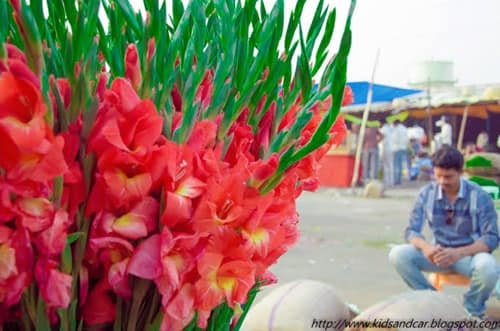
Tuberoses (rajanigandha), marigold hybrids, chrysanthemums, lotus flowers for temple use, and seasonal flowers including dahlias and gladioli fill dedicated vendor sections. Roses — both Indian-grown and Bangalore cold-chain roses — are available in single stems, bunches, and bulk boxes. The more exotic end of the market includes orchids, lilies, gerberas, sunflowers, and imported florals for weddings and events.
Bundles are priced from Rs 10 onwards for common flowers — the price fluctuating significantly based on season, supply from producing regions, and how early in the morning you arrive. Custom garlands for specific occasions are made on-site by skilled garland-makers who work at impressive speed. Hiring one of these artisans for a few minutes produces wedding-quality garland work at a fraction of what a florist shop would charge.
Wholesale buyers — florists, event decorators, wedding planners, hotel lobby managers, and the small street vendors who sell flowers at traffic signals — arrive first. Retail buyers who want flowers for home or temple use follow later in the morning. By 9 AM the wholesale rush is largely over, and by 10 AM the market has settled into its retail rhythm, which continues through the day until early evening.
Nearby Areas Worth Visiting
Mehdipatnam Junction itself is a major commercial area with clothing shops, electronics, and food options. The Falaknuma Palace hotel — one of Hyderabad’s most spectacular heritage hotels and formerly the Nizam’s guest palace — is approximately 8 km away and worth an afternoon visit if the visit to the flower market is the morning’s activity. Charminar, Laad Bazaar, and the old city are accessible from Mehdipatnam by auto or bus, making it natural to combine a dawn flower market visit with an old city afternoon. Golconda Fort is also in the same southern Hyderabad belt.
FAQs
Q1. What is Gudimalkapur Flower Market Hyderabad famous for?
Gudimalkapur is Hyderabad’s largest wholesale flower market and one of the biggest in South India, known for marigolds, jasmine, tuberoses, roses, and wholesale trade supplying florists, wedding decorators, temples, and street flower vendors across the city. It has been the city’s primary flower wholesale hub since 2009 after the shift from Jambagh.
Q2. What are the timings of Gudimalkapur Flower Market?
The market operates from 4:00 AM to 8:00 PM daily with no weekly off. The wholesale peak is between 4:00 AM and 9:00 AM when the freshest arrivals are traded. Retail buyers can visit from early morning through the day, with afternoon trade considerably quieter.
Q3. What is the best time to visit Gudimalkapur Flower Market?
Between 5:00 AM and 7:00 AM for the fullest experience — fresh flowers at peak selection, active wholesale trading, vivid colours and fragrance, and the opportunity to see how Hyderabad’s daily floral supply chain actually operates. Photographers particularly favour this pre-sunrise-to-dawn window for light and activity.
Q4. Which metro station is nearest to Gudimalkapur Flower Market?
Lakdi-Ka-Pul Metro Station and Nampally Metro Station on the Hyderabad Metro Red Line are the closest, approximately 4 km away. Auto-rickshaws from either station reach the market directly. TSRTC buses to Mehdipatnam also serve the route.
Q5. Can individual buyers purchase flowers retail at Gudimalkapur Market?
Yes. While wholesale bulk buying dominates the early morning hours, individual retail buyers are welcome and can purchase loose flowers, bundles, or custom-made garlands throughout the day. Prices are considerably lower than retail florist shops. Bargaining is standard — compare prices across two or three vendors before buying.