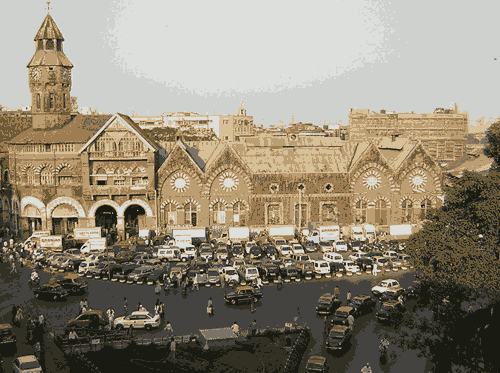
Mumbai was built around commerce, and the building that best represents that original commercial identity is Crawford Market. Completed in 1869 and sitting between Chhatrapati Shivaji Maharaj Terminus and Mohammed Ali Road, the market was designed in the Victorian Gothic style by British architect William Emerson — the same architect who later designed the Victoria Memorial in Kolkata. The 50-foot clock tower still keeps time for the surrounding streets. The relief panels above the entrance, showing agricultural workers and merchants, were designed by Rudyard Kipling’s father, Lockwood Kipling, then working as Principal of the Bombay School of Art. The building was gifted to the city by businessman Cowasji Jehangir and officially renamed Mahatma Jyotiba Phule Mandai to honour the social reformer. Most of Mumbai still calls it Crawford Market without hesitation.
The market underwent a heritage restoration project in 2025 that reinforced structures and cleaned masonry — the building is a Grade II heritage site, and the restoration has made it more visually striking than it has been in decades.
Quick Overview: Crawford Market Mumbai
| Detail | Information |
| Official Name | Mahatma Jyotiba Phule Mandai (Crawford Market) |
| Location | Lokmanya Tilak Road, Dhobi Talao, CST Area, Fort, Mumbai – 400001 |
| Built | 1869, designed by William Emerson |
| Area | Fort, South Mumbai |
| Market Type | Covered heritage wholesale and retail market |
| Timings | 11:00 AM – 8:00 PM (most retail shops); some sections from 5:00 AM |
| Weekly Off | Sunday (most shops; some sections partially open in morning) |
| Nearest Railway Station | Chhatrapati Shivaji Maharaj Terminus (CSMT), ~10 min walk |
| Nearest Metro | Hutatma Chowk Station, Line 3 (~12 min walk) |
| Known For | Fresh produce, imported food items, spices, dry fruits, pets, party supplies, wholesale goods |
| Heritage Status | Grade II heritage building |
Where Exactly Is Crawford Market
Crawford Market is located on Lokmanya Tilak Road in the Dhobi Talao area, CST precinct, Fort, Mumbai 400001. The market sits at the northern edge of South Mumbai’s historic commercial zone — a few minutes north of CSMT and at the threshold between Fort’s administrative district and the dense Mohammed Ali Road and Kalbadevi commercial belt to the north.
Chhatrapati Shivaji Maharaj Terminus (CSMT) is the nearest major railway station, approximately a 10-minute walk from the market entrance on the Lokmanya Tilak Marg side. This makes Crawford Market accessible from both the Central Line (for commuters from Thane, Navi Mumbai, and eastern suburbs) and the Western Line via interchanges. Masjid Railway Station on the Harbour Line is another option slightly closer. For metro access, the fully operational Mumbai Metro Line 3 (Aarey to Cuffe Parade, operational in full from 2025-26) includes Hutatma Chowk Station at approximately a 12-minute walk through the Fort heritage precinct. BEST bus routes 1, 3, 7, 51, 102, and 124 stop within walking distance. Auto-rickshaws do not operate in South Mumbai — taxis, Uber, and Ola are the road transport options. Parking near Crawford Market is extremely limited; BMC parking near Azad Maidan is the best nearby lot.
What Shops You Will Find
The market operates in clearly differentiated sections within its Victorian structure and surrounding streets. Fresh produce is the ground-level anchor — fruits, vegetables, and spices sold to both households and restaurant buyers from stalls inside and around the market’s covered halls. The imported food section is what makes Crawford Market exceptional: chocolates from European brands, cheeses, canned and bottled goods, imported sauces and condiments, international biscuits and confectionery, and specialty ingredients that are difficult to source through standard retail channels. This imported food section draws chefs, expat residents, and serious food enthusiasts from across the city.
Spices and dry fruits are among the market’s most purchased categories. Kashmiri chillies, whole and powdered spices in bulk, dried fruits, nuts, and specialty cooking ingredients are available at competitive wholesale prices from dedicated dealers who supply restaurants and households across South Mumbai. The aroma of dried chilli, clove, and coriander mixing with fresh produce is one of Crawford Market’s most distinctive sensory experiences.
Pet shops — selling puppies, kittens, birds (parrots, finches, pigeons), fish, and small pets — occupy a dedicated section of the market that has been operating since the market’s Victorian origins. The pet section draws a specific and loyal buyer community, though animal welfare practices vary significantly across vendors and buyers should exercise judgment.
Party supplies, decorations, and festive goods fill another commercial zone. Wholesale balloons, paper decorations, ribbon, giftwrapping materials, and event supplies are sourced here by event planners and retailers. Textiles, clothing, bags, and household goods complete the market’s comprehensive range.
A 2025 heritage restoration project has improved the building’s structural integrity and cleaned the masonry, making the Victorian architecture more visible and the market more photogenic than it has been in years.
Food Near Crawford Market
Crawford Market’s South Mumbai location puts it within the same zone as some of the city’s most celebrated food streets. Mohammed Ali Road — running immediately north of the market — is Ramadan’s most famous food destination but carries excellent kebabs, nihari, sheermal, and Mughlai cuisine year-round. Bohri Mohalla, with its Bohra community’s distinctive cuisine, is accessible from the same zone. The area around CSMT has Irani cafés serving the classic Mumbai bun maska and chai combination that anchors the city’s breakfast culture. For bakery items, Crawford Market’s surrounding streets have independent bakeries that have served the area’s Catholic and Parsi community for generations.
Nearby Areas Worth Visiting
CSMT itself — the UNESCO World Heritage Site Victorian Gothic railway terminal — is a 10-minute walk and worth a proper look at the architecture rather than just a passing commuter glance. The GPO (General Post Office), also a heritage Victorian structure, is adjacent. Bhuleshwar Market, Zaveri Bazaar (Mumbais gold jewellery hub), and Mangaldas Market (wholesale textiles) are all within the same South Mumbai commercial belt, making Crawford Market a natural starting point for a full heritage commerce day in the city’s oldest trading district.
FAQs
Q1. What is Crawford Market Mumbai famous for?
Crawford Market is Mumbai’s oldest covered market (1869), famous for imported food products, fresh produce, wholesale spices and dry fruits, pet shops, and party supplies. The building itself — a Grade II Victorian Gothic heritage structure with a clock tower and Lockwood Kipling-designed relief panels — is a significant architectural landmark in South Mumbai.
Q2. What are the timings of Crawford Market Mumbai?
Most retail shops operate from 11:00 AM to 8:00 PM. Some produce sections open as early as 5:00 AM. The market is largely closed on Sundays, with only partial morning activity in some sections.
Q3. Which is the nearest station to Crawford Market Mumbai?
Chhatrapati Shivaji Maharaj Terminus (CSMT) is the nearest major railway station, approximately a 10-minute walk. Masjid Station on the Harbour Line is also close. Mumbai Metro Line 3’s Hutatma Chowk Station is approximately a 12-minute walk through the Fort heritage precinct.
Q4. Is Crawford Market good for buying imported food?
Yes — the imported food section at Crawford Market is one of the best-stocked in Mumbai for European chocolates, imported cheeses, condiments, specialty ingredients, and international packaged food at prices often below what organised specialty supermarkets charge.
Q5. Has Crawford Market been renovated recently?
Yes. A heritage restoration project completed in 2025 reinforced the structure, cleaned the Victorian masonry, and improved the building’s overall condition. Crawford Market is classified as a Grade II heritage site, and the restoration has made the architectural details significantly more visible and the market more accessible for both commerce and photography.