A well-located office or warehouse can generate two to three times the rental income of a similarly priced residential apartment, yet residential properties still account for roughly 75% of all real estate transactions in India by volume. That gap between where the yield actually is and where most investors actually put their money says a lot about how differently these two asset classes are perceived versus how they actually perform. With commercial properties delivering gross rental yields of 6-12% against residential’s more modest 2-5%, understanding exactly where each genuinely wins matters before committing lakhs, or crores, of capital.
The Core Yield Gap Driving This Entire Debate
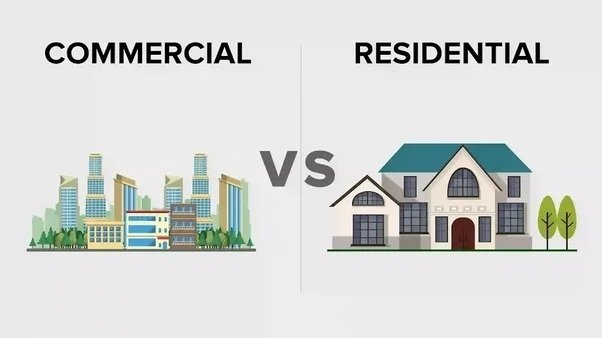
Rental yield, the annual rent a property earns as a percentage of its value, is where the two asset classes diverge most sharply, and it’s the number most comparisons come back to first.
- Residential properties typically deliver gross yields of 3-5% across most Indian metros, with anything above 4% considered genuinely strong and above 5% in a liquid, well-connected micro-market considered exceptional.
- Commercial properties deliver considerably higher yields, generally 6-12%, with premium Grade-A offices in cities like Bangalore, Hyderabad, Gurgaon, and Noida often reaching 8-10%, and a good commercial yield in 2026 is generally considered 8-10% depending on location and asset type.
- Warehousing and logistics parks currently rank among the strongest-performing commercial categories, yielding roughly 7-10%, fueled directly by India’s rapid e-commerce growth, manufacturing expansion, and industrial corridor development.
- The reason for this gap is structural: commercial tenants pay considerably higher rents relative to property value, and lease terms run longer, giving landlords more predictable, escalating income over time compared to residential’s shorter lease cycles.
Capital Requirement — Why Residential Still Dominates by Volume
Despite commercial’s yield advantage, residential real estate carries considerably lower entry barriers, which is precisely why it remains the default choice for most Indian investors.
- Commercial real estate demands a genuinely larger initial investment, often putting institutional-grade properties out of reach for first-time or smaller-budget investors.
- Residential properties dominate roughly 75% of India’s real estate transactions by volume, reflecting both lower entry capital and broader market familiarity among ordinary buyers.
- This capital gap alone explains why most retail investors gravitate toward residential first, even though the yield math clearly favors commercial for those who can afford the entry ticket.
Risk and Volatility — A Genuinely Different Profile for Each
The two asset classes don’t just differ in return, they carry meaningfully different risk characteristics that matter across an economic cycle.
- Residential rental income tends to remain considerably more stable, since tenants require only limited infrastructure and utilities, keeping operating costs lower and demand more consistent regardless of broader economic conditions.
- Commercial rental value can drop significantly when the market slows, since businesses are considerably more sensitive to economic downturns than individual households needing a place to live regardless of circumstances.
- Commercial properties also carry genuine vacancy risk, tenant turnover, though generally less frequent than residential, can leave a unit empty for considerably longer stretches while a new business tenant is found.
- Residential leases are typically shorter, often 11 months to a few years, giving landlords more frequent opportunities to reset rent, but also creating more frequent tenant turnover to manage.
Capital Appreciation — Where Residential Often Wins
Rental yield tells only part of the story; long-term price growth is where residential frequently pulls ahead of its higher-yielding counterpart.
- Residential properties tend to appreciate steadily, driven by population growth and consistent housing demand, with the segment historically delivering 15-35%+ appreciation in strong growth corridors.
- Commercial assets can experience rapid value increases specifically in developing business districts, but this growth is considerably more location-dependent and less broadly consistent than residential appreciation tends to be.
- The general framing industry advisers use is genuinely clear: commercial wins decisively on yield and cash-flow certainty, while residential wins on long-term appreciation speed and broader tax benefits.
Tax Treatment — A Genuine Point of Difference
The two property types are treated quite differently under India’s tax code, and this affects your actual after-tax return meaningfully.
- Home loans for residential property offer substantial deductions: up to ₹1.5 lakh on principal repayment under Section 80C, and up to ₹2 lakh on interest under Section 24(b) for a self-occupied property, benefits not structured the same way for commercial property loans.
- Commercial property investors can typically claim depreciation and various business-related expense deductions instead, a genuinely different tax treatment suited to investors approaching the property as a business asset rather than a personal residence.
- This tax gap is a significant, often overlooked factor that shifts the effective, after-tax return comparison somewhat back in residential’s favor for buyers who qualify for the full home loan deduction benefits.
Management Complexity and Liquidity
Beyond returns and risk, how much active effort a property demands, and how easily you can exit it, genuinely matters for most investors’ actual experience.
- Residential properties are generally easier to manage, requiring less specialized oversight, and enjoy considerably better liquidity given the broader, more active pool of buyers and renters at any given time.
- Commercial properties demand more active management, lease negotiations, tenant quality assessment, and maintenance coordination, and typically take longer to sell given the smaller, more specialized pool of commercial buyers.
- For investors prioritizing a genuinely passive, low-effort holding, residential remains the more practical choice despite its lower yield ceiling.
Which Indian Cities Currently Lead in Each Category
Location performance genuinely diverges between the two asset classes, and knowing which cities lead where matters for actually deploying capital effectively.
- For residential rental income specifically, Bengaluru, Hyderabad, Chennai, and Kolkata currently lead, benefiting from strong IT employment growth, infrastructure expansion, and sustained metropolitan development.
- For commercial rental yield, Mumbai, Bangalore, Hyderabad, Pune, Delhi NCR, Chennai, and Ahmedabad remain the strongest-performing markets, with warehousing and logistics parks specifically standing out amid rapid e-commerce and manufacturing expansion.
- Noida and Lucknow are increasingly cited as offering a genuinely good balance between the two asset classes, worth considering if you want exposure to both yield and appreciation without committing fully to one extreme.
When Residential Makes More Sense
- You’re a first-time investor with limited capital, since residential entry costs remain considerably more accessible than commercial.
- You want a genuinely passive investment requiring minimal active management and easier tenant turnover.
- You’re prioritizing home loan tax benefits and steady, long-term capital appreciation over immediate cash flow.
- You value liquidity, since residential properties are generally easier and faster to sell if you need to exit.
When Commercial Makes More Sense
- You’re specifically seeking strong, consistent rental income as your primary investment goal, rather than long-term appreciation.
- You have sufficient capital to meet commercial real estate’s considerably higher entry threshold.
- You’re comfortable with greater active management involved in lease negotiation, tenant assessment, and vacancy risk.
- You’re diversifying an existing residential-heavy portfolio and want exposure to the considerably higher 6-12% yield range commercial assets typically offer.
The Bottom Line
Residential and commercial property genuinely serve different investment goals rather than one being universally better, commercial delivers considerably stronger rental yields and cash-flow certainty, while residential offers lower entry barriers, easier management, better liquidity, and stronger tax benefits alongside steadier long-term appreciation. The smartest approach for most Indian investors is treating this as a portfolio allocation question rather than an either-or decision, starting with residential for accessibility and stability, then diversifying into commercial once you have sufficient capital and risk appetite for its higher yield, higher management complexity trade-off. This is general informational content, not personalised investment advice; consulting a real estate adviser or financial planner about your specific capital, risk tolerance, and goals remains genuinely worthwhile before committing to either asset class.
Frequently Asked Questions
Q1. Is commercial property genuinely always a better investment than residential given its higher rental yield?
A: Not necessarily, higher yield comes with genuinely greater risk, commercial rental value can drop significantly during economic slowdowns, vacancy periods tend to be longer, and the considerably higher entry capital required makes it less accessible and harder to diversify across multiple properties compared to residential.
Q2. How do I calculate whether a specific property is actually giving me a good rental yield?
A: Use the formula: ((Annual Rent minus Annual Expenses) divided by Property Value) multiplied by 100, this gives you the net yield, reflecting actual returns after costs, rather than the gross yield alone, which can look attractive on paper but overstate real profitability once maintenance and other expenses are factored in.
Q3. Can I get the same home loan tax benefits if I buy a commercial property instead of residential?
A: No, the Section 80C (₹1.5 lakh) and Section 24(b) (₹2 lakh) deductions specifically apply to residential home loans, while commercial property investors typically claim different benefits like depreciation and business expense deductions instead, making the tax treatment genuinely different between the two asset classes.
Q4. If I only have a moderate amount of capital, should I still consider commercial property at all?
A: For moderate capital, residential property generally remains the more practical starting point given its lower entry barrier and easier management, though some investors explore smaller commercial units like retail shops or co-working spaces as a middle-ground option once they’ve built sufficient capital and want to diversify beyond pure residential holdings.