“If I had a longer horizon and no intention of renting, the plot might have been the better pure-appreciation bet. But I had an EMI to service, and a vacant plot does not help with that.” That’s a verified buyer from Noida reflecting three years after choosing a flat over a plot, and it captures the entire debate in one honest sentence. Nearly every industry analysis agrees plots generally deliver stronger long-term price appreciation than flats, but “long-term” is doing a lot of work in that sentence, since the years before that appreciation shows up genuinely matter too.
Why Plots Generally Win on Pure Long-Term Appreciation
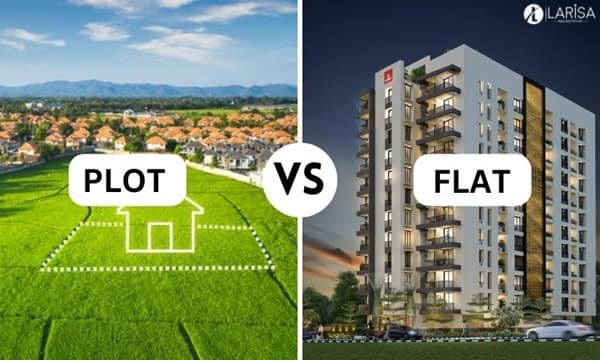
The core argument for plots rests on a simple economic principle: land is finite, buildings are not.
- Land is a scarce resource that grows more valuable as towns and cities expand, while a concrete structure begins physically depreciating the moment it’s completed, even as the land beneath it continues appreciating.
- Flats typically lose roughly 2-3% of their building value each year through wear, ageing infrastructure, and rising maintenance needs, a drag on returns that plots simply don’t carry since there’s no structure to depreciate.
- One industry analysis specifically claims land can deliver up to 30% higher long-term returns than apartments over a 5-10 year horizon, though this figure comes from developer-affiliated research and should be treated as directional rather than a guaranteed universal outcome.
- “A plot only becomes productive once construction happens,” notes Chinmay Gaur, Real Estate and CX Analyst at Square Yards, “buyers comparing the two purely on appreciation potential without accounting for the carrying costs during that gap are missing half the picture.”
The Genuine Trade-Off: Zero Income Versus Immediate Cash Flow
This is where the “long-term” framing genuinely matters, since the two assets behave completely differently during the years you’re actually holding them.
- A flat is a productive asset from the moment possession is taken, generating rental income immediately, which can meaningfully offset EMI payments and other holding costs throughout the ownership period.
- A vacant plot generates zero income unless and until you construct on it, meaning any EMI, property tax, or opportunity cost of capital comes entirely out of pocket with no offsetting cash flow during the holding period.
- Flats give you cash right away through monthly rent to help service loan payments, while plots give you zero monthly cash but potentially pay out a much larger lump sum when you eventually sell, a genuinely different cash-flow profile that matters enormously depending on your personal financial situation.
- For the Noida buyer quoted above, the flat’s rental income “offset a significant part of the total holding cost“, precisely the practical consideration that pure appreciation comparisons tend to leave out.
Ongoing Costs That Quietly Erode Flat Returns
Beyond building depreciation, flats carry a genuinely persistent category of expense that plots largely avoid.
- Apartment owners typically pay fixed monthly maintenance fees ranging from roughly ₹3 to ₹8 per square foot, charged regardless of whether the flat is occupied, rented, or sitting vacant.
- Over a 10-year holding period, these recurring fees, combined with periodic building repairs and repainting, can meaningfully eat into total returns, a cost category that compounds specifically because it’s mandatory and ongoing rather than optional.
- Plots avoid nearly all of this cash drain, typically requiring only a modest annual property tax payment to the local government, with no society maintenance, no building upkeep, and no shared-facility charges.
The Genuine Legal and Risk Differences
Long-term appreciation potential means little if the underlying asset carries hidden legal exposure, and this is where plots and flats diverge considerably.
- Land title disputes are more common on vacant plots than in completed apartments, since a plot’s ownership chain and boundaries can be genuinely harder to verify conclusively than a RERA-registered apartment project’s documentation.
- NA (non-agricultural) conversion status must be independently verified for any plot purchase, since land still classified for agricultural use generally cannot be legally used for residential construction without proper conversion.
- Encroachment risk is genuinely higher on vacant land than on a completed, occupied apartment building, simply because an empty plot is easier for others to physically encroach upon over a long holding period.
- Plot financing typically comes with a lower loan-to-value ratio, meaning you need considerably more of your own funds upfront compared to a comparable flat purchase, where banks generally offer higher LTV ratios.
- Buying within an officially approved, RERA-compliant gated land project meaningfully reduces the traditional risks associated with standalone land purchases, illegal transfers, disputed titles, or outright land-grabbing scams, since these projects go through similar regulatory scrutiny as large apartment developments.
Why Flats Remain Simpler for Remote or NRI Investors
Practical management burden is a genuinely underweighted factor in most plot-versus-flat comparisons, and it matters enormously for anyone who can’t personally oversee the property.
- For NRI investors specifically, flats tend to be considerably simpler to manage: the housing society handles maintenance directly, RERA provides regulatory oversight over the builder, and the unit can be rented out without requiring the owner’s physical presence at all.
- Plots require a trusted local caretaker to manage and monitor the vacant land over time, remain more exposed to encroachment risk during extended holding periods, and generally carry fewer RERA-style protections than a registered apartment project.
- This management gap genuinely matters for anyone considering a multi-year or multi-decade holding period without the ability to personally inspect and maintain the asset regularly.
What a 10-20 Year Holding Period Actually Requires You to Weigh
For genuinely long-term investors specifically planning to hold for a decade or more, the decision shouldn’t rest on appreciation potential alone.
- Location, budget, loan cost, maintenance, rental income, legal checks, and future area development all matter simultaneously, rather than any single factor, like projected resale price, driving the decision on its own.
- A plot offers the owner greater freedom: the flexibility to build a custom home eventually, hold the land purely for appreciation, or sell it undeveloped whenever the market conditions favor an exit.
- A flat offers immediate usability: ready infrastructure, shared amenities, and the ability to move in or rent out the unit right away, without needing to fund and manage a separate construction project first.
When a Plot Is Genuinely the Better Long-Term Choice
- You have a genuinely long investment horizon, 10+ years, and don’t need income from the asset during that holding period.
- You have sufficient capital for the lower loan-to-value requirement, without needing to lean heavily on financing.
- You’re investing in a growth corridor or supply-constrained area where infrastructure is actively improving over time.
- You want the flexibility to eventually construct according to your own specifications, rather than being locked into an existing building’s layout and age.
When a Flat Is Genuinely the Better Long-Term Choice
- You need the property to be financially productive from day one, through rental income offsetting EMI or holding costs.
- You want easier financing through higher loan-to-value ratios and more straightforward home loan approval.
- You’re an NRI or remote investor who needs a property manageable without regular personal oversight.
- You value RERA-backed legal protection and a comparatively lower-diligence purchase process.
The Bottom Line
Plots generally deliver stronger raw price appreciation over a genuinely long holding period, since land is finite and doesn’t physically depreciate the way a building does, but that appreciation potential comes bundled with zero income during the holding period, more demanding legal verification, lower loan-to-value financing, and a considerably heavier management burden for anyone who can’t personally oversee the asset. Flats sacrifice some of that pure appreciation ceiling in exchange for immediate rental income, easier financing, RERA protection, and genuinely simpler long-distance management, trade-offs that matter enormously depending on whether you need the property to be financially productive during your ownership period or are purely optimizing for the eventual sale price. This is general informational content, not personalised investment advice; consulting a real estate adviser about your specific location, capital, and timeline remains genuinely worthwhile before committing to either option for a long-term hold.
Frequently Asked Questions
Q1. If plots appreciate more over the long term, why do so many long-term investors still choose flats?
A: Because appreciation potential alone doesn’t account for holding costs, a flat generates rental income from day one that can offset EMI and expenses throughout the ownership period, while a vacant plot produces zero cash flow until construction happens, making flats genuinely more practical for investors who need the property to be financially productive during a long hold, not just at eventual sale.
Q2. Is it true that flats lose value every year while plots only ever go up?
A: Not entirely, the building component of a flat does depreciate roughly 2-3% annually due to physical ageing, but the land underneath the flat still appreciates, meaning a flat’s total value reflects a mix of a depreciating structure and an appreciating land component, rather than pure decline; plots aren’t guaranteed to only rise either, location and infrastructure development still drive their actual appreciation.
Q3. What’s the single biggest legal risk to check before buying a plot specifically for a long-term hold?
A: Verifying clear land title and confirming NA (non-agricultural) conversion status where applicable are genuinely the most critical checks, since land title disputes and encroachment risk are meaningfully more common on vacant plots than in completed, RERA-registered apartment buildings, and these issues can take years to resolve if discovered after purchase.
Q4. Can an NRI realistically manage a plot investment from abroad over a 10-20 year period?
A: It’s genuinely more demanding than managing a flat remotely, plots require a trusted local caretaker to monitor the land and reduce encroachment risk over an extended holding period, and they carry fewer RERA-style protections than apartments, whereas flats benefit from housing society maintenance and regulatory oversight that make remote, long-term ownership considerably more straightforward.