Every morning across rural India, millions of farmers walk to their cattle shed before sunrise, and by the time most people are still asleep, they’ve already generated the day’s income. Milk doesn’t wait for market prices to improve or festival seasons to arrive, it sells every single day, which is exactly why dairy farming remains one of rural India’s most dependable income sources rather than a seasonal gamble. India produces over 230 million tonnes of milk annually, making it the world’s largest milk-producing nation, and that scale genuinely reflects millions of individual farmers finding this business works.
Here’s why understanding the real numbers genuinely matters before you invest your savings into cattle and shed construction: dairy farming rewards patient, disciplined management far more than enthusiasm alone, and the gap between a profitable ten-cow operation and a struggling one usually comes down to a handful of specific decisions, feed management chief among them, rather than luck or milk prices alone.
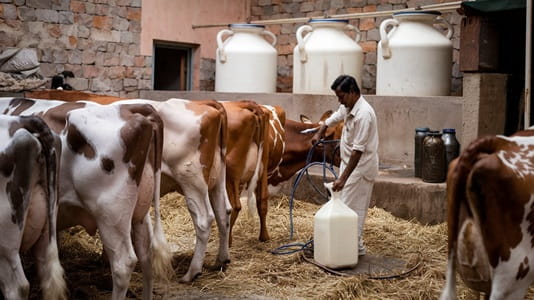
What Genuine Profit Margins Actually Look Like
Dairy farming in India genuinely delivers profit margins between 15% and 35%, with well-managed operations typically landing in the 20-25% range once you account for feed, labour, veterinary care, and housing maintenance. On a per-animal basis, farmers genuinely earn ₹250 to ₹400 net profit per cow per day after covering feed and maintenance costs, a figure that scales meaningfully once you’re running a herd of ten or more animals.
A well-managed 10-cow dairy farm genuinely delivers annual returns of 60% to 70% on investment, with annual net profit reaching ₹6 to 6.5 lakh against a typical ₹10 lakh investment, meaning full payback within under two years in a genuinely favourable scenario. This return profile genuinely compares favourably against many small business alternatives, particularly given milk’s daily, non-seasonal demand compared to businesses dependent on discretionary consumer spending.
Understanding Your Real Investment Requirement
Starting a small dairy operation with roughly 8 to 10 cows or buffaloes typically requires ₹6 to 12 lakh in initial investment, covering livestock purchase, cattle shed construction, basic milking equipment, and working capital for the first several months of feed costs. Individual dairy animals themselves genuinely cost ₹50,000 to ₹80,000 depending on breed and proven milk-producing capacity, while cattle shed construction typically runs ₹1.5 to 3 lakh depending on your chosen scale and materials.
Scaling beyond this basic setup genuinely changes the economics too. A 50-cow ultra-modern commercial operation with comprehensive housing and milking systems typically requires ₹30 to 60 lakh, while adding value-added processing, ghee and paneer production specifically, requires a further ₹20 to 50 lakh investment. This staged approach, starting small and reinvesting profits into expansion, genuinely reduces your risk compared to committing to large-scale infrastructure before you’ve proven your management capability at a smaller scale first.
Why Feed Management Genuinely Determines Your Profitability More Than Anything Else
This is genuinely the single most important operational insight for anyone entering this business. Feed and nutrition account for 60% to 70% of your total operating expenses, meaning your entire profit margin genuinely hinges on how efficiently you manage feeding rather than any other single factor, including milk pricing itself.
This concentration of cost means growing your own fodder, where you have adequate land, genuinely provides a meaningful cost advantage over purchasing all feed externally, and it’s precisely why farmers with access to more land beyond the minimum required for housing genuinely benefit from allocating some toward fodder cultivation. Poor nutrition planning is also genuinely cited as one of the leading causes of dairy farm failure, alongside inadequate disease management and insufficient upfront planning, underscoring how much this single cost category deserves your attention before anything else.
Why Buffalo Dairy Farming Genuinely Deserves Consideration Alongside Cows
This is worth understanding as a genuine strategic choice rather than simply defaulting to cows. Dairy buffalo farming has the potential to deliver returns of around 60% on invested capital, partly because buffalo milk genuinely commands a higher price than cow’s milk in most Indian markets, reflecting its higher fat content and the premium ghee and dairy products it supports.
Crossbreed cows, particularly Holstein Friesian and Jersey crosses, genuinely produce higher daily milk volumes, typically 15 to 25 litres under optimal management, making them the preferred choice for farmers prioritising volume-driven income. Your specific choice between cow and buffalo genuinely should reflect your local market’s pricing preferences and your available land and feed resources, rather than assuming one option is universally superior to the other.
Why Government Subsidies Genuinely Reduce Your Risk Considerably
This business genuinely benefits from substantial institutional support worth taking seriously before you fund everything from personal savings alone. The Dairy Entrepreneurship Development Scheme and Animal Husbandry Infrastructure Development Fund genuinely compensate eligible capital expenditure at 25% to 33%, while NABARD and various state governments offer additional subsidies covering a similar 25-35% share of your total project cost.
Accessing these schemes genuinely requires proper documentation and a clear business plan upfront, but the capital relief they provide considerably improves your return on personal investment and reduces the financial risk of your first year or two, precisely when cash flow uncertainty tends to be highest for new dairy farmers still building their herd’s productive capacity and establishing reliable milk buyers.
Why Value Addition Genuinely Pushes Returns Even Higher
Beyond selling raw milk, farmers who process even a portion of their output into ghee, paneer, or yoghurt genuinely capture considerably more value per litre than raw milk sales alone provide. Additional by-product revenue streams, calf sales, biogas from manure, and manure sales to nearby farms, genuinely add incremental income that compounds your overall return without requiring proportionally more capital investment.
Direct selling to nearby households, bypassing middlemen entirely, also genuinely improves your margins meaningfully, since eliminating the intermediary markup lets you capture pricing closer to retail rates while still typically offering your customers a genuinely fair price compared to what they’d pay for packaged, processed milk elsewhere.
Frequently Asked Questions
Q1. How much money do I genuinely need to start a small dairy farm with around 10 cows in India?
Most sources genuinely place this between ₹6 lakh and ₹12 lakh, covering livestock purchase, cattle shed construction, basic milking equipment, and initial working capital, though this figure varies depending on your specific location, chosen breed quality, and infrastructure standards.
Q2. Is buffalo dairy farming genuinely more profitable than cow dairy farming in India?
Buffalo dairy can genuinely deliver stronger returns, potentially around 60% on invested capital, largely because buffalo milk commands higher pricing due to its fat content, though crossbreed cows typically produce higher daily milk volumes, making the better choice depend on your local market’s specific pricing and your own management priorities.
Q3. What’s the single biggest factor that genuinely determines whether a dairy farm succeeds or fails?
Feed and nutrition management genuinely matters most, since it accounts for 60% to 70% of total operating expenses, meaning poor feeding strategy directly undermines profitability more than almost any other factor, alongside disease management and adequate upfront planning.
Q4. Can I genuinely access government subsidies to reduce my personal capital investment in dairy farming?
Yes, genuinely, schemes like the Dairy Entrepreneurship Development Scheme, AHIDF, and various NABARD and state government programmes typically compensate 25% to 35% of your eligible project cost, considerably reducing the personal capital burden and accelerating your return on investment when properly accessed with the right documentation.