Ahmedabad’s old city is one of the most historically dense urban environments in India — a UNESCO World Heritage City designation since 2017 confirms what residents have always known. Within the walled city’s layered geography of pols, mosques, step wells, and temple clusters, Manek Chowk is the central public square around which much of old Ahmedabad’s daily rhythm has organised itself since the city’s founding in 1411. The square was named after Baba Maneknath — a saint whose intervention, according to local legend, shaped the very founding of Bhadra Fort and therefore the founding of Ahmedabad itself.
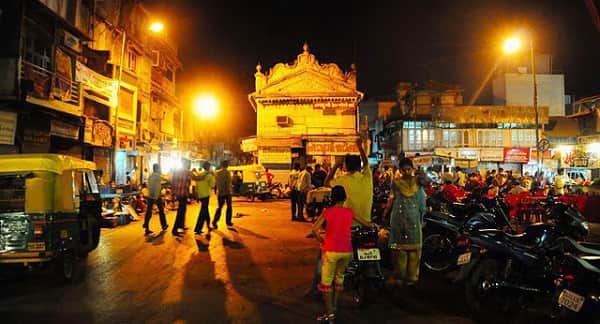
What makes Manek Chowk extraordinary by market standards is its complete daily transformation. It is three entirely different markets occupying the same physical space at different hours of the day. Morning belongs to vegetable vendors. Afternoon belongs to gold and silver bullion traders who operate one of India’s largest jewellery wholesale markets. Night belongs to street food stalls that transform the square into one of Gujarat’s most celebrated food streets from 8 PM until well past midnight.
Quick Overview: Manek Chowk Food Market Ahmedabad
| Detail | Information |
| Location | Manek Chowk, Old Ahmedabad (Khadia area), near Bhadra Fort, Ahmedabad, Gujarat |
| Coordinates | 23°1’25″N 72°35’19″E |
| Area | Old City (Walled City), central Ahmedabad |
| Named After | Baba Maneknath (saint associated with Bhadra Fort founding, 1411) |
| Market Type | Triple-identity city square — morning produce, afternoon bullion/jewellery, night food street |
| Morning (Vegetable) Timings | 5:00 AM – 12:00 PM |
| Afternoon (Jewellery/Bullion) Timings | 11:00 AM – 8:00 PM |
| Night Food Market Timings | 8:00 PM – 1:00 AM (peak 9:30 PM onwards) |
| Entry Fee | None |
| Distance from Ahmedabad Junction | ~2 km |
| Known For | Night food street, gold and silver jewellery wholesale, vegetable market, kulfi, pav bhaji, sandwiches |
| Food Type | Strictly vegetarian (no non-vegetarian food served) |
Where Exactly Is Manek Chowk
Manek Chowk is located within the Khadia locality of Old Ahmedabad, near Bhadra Fort, in the historic walled city zone that UNESCO designated as a Heritage City in 2017. The square sits at the geographic and cultural heart of old Ahmedabad, surrounded by historical structures including the Bhadra Fort, the Teen Darwaza (Triple Gate), and the Sidi Saiyyed Mosque — one of India’s finest examples of Islamic architecture, famous for its stone lattice windows.
Ahmedabad Junction Railway Station is approximately 2 km from Manek Chowk. The Ahmedabad Metro’s BRTS network and city bus services connect the old city to the railway station and other parts of Ahmedabad. Taxis and auto-rickshaws navigate to Manek Chowk without difficulty, though the innermost lanes of the old city require walking from a nearby drop-off point. Evenings present traffic congestion as the food market draws crowds from across Ahmedabad — arriving by auto-rickshaw or on foot from a nearby parking point is more practical than driving to the square itself on busy nights.
There is no entry fee to visit Manek Chowk at any time of day.
What Happens at Manek Chowk Through the Day
The morning identity — fresh vegetables, fruits, coconuts, and produce — serves the cooking needs of old city households and the restaurants of the walled city zone. Early morning visitors find a practical, working vegetable market with prices calibrated for the local population rather than tourists.
The afternoon jewellery and bullion trading is Manek Chowk’s commercial heavyweight. Gold and silver are traded in significant quantities between dealers, jewellers, and wholesalers whose operations represent one of India’s largest bullion markets by volume. Old jewellery shops within the square have operated for generations, and the afternoon trading character reflects Ahmedabad’s long-established role in Gujarat’s gold trade culture.
The night food market — what most visitors come specifically for — begins building around 8 PM and reaches its peak energy after 9:30 PM. Food stalls appear where the bullion and vegetable trade occupied the space just hours before, transforming the square with the aroma of butter, the sizzle of dosas, and the clatter of kulfi moulds. Everything served at Manek Chowk is vegetarian — Gujarat’s food culture is predominantly plant-based, and the night market reflects this completely.
Pav bhaji — butter-drenched vegetables served with bread rolls — is one of the most popular items, with the Mahalaxmi Pavbhaji Centre among the stalls with the most loyal following. The Gwalior dosa, a South Indian preparation adapted for Ahmedabadi taste with generous amounts of butter and local spicing, has become a night market specialty. Kulfi — traditional dense ice cream in flavours from mango and strawberry to peach — is the dessert of choice, particularly in summer months. The Amdavadi sandwich culture produces distinctive varieties: chocolate sandwiches, pineapple sandwiches, and the ghoogra sandwich that have no direct equivalent elsewhere.
Jamun shots — fresh jambul (Indian blackberry) fruit juice served in small glasses — are a seasonal treat in the monsoon and post-monsoon period. Masala dosa, bhaji pav in multiple varieties, and fresh fruit preparations complete the night market’s range.
Regulars note that the night food experience is best on weekend evenings when the market is at its most vibrant and the competition between stalls drives quality upward. Weekday visits from around 9 PM to 11 PM are less crowded while still offering the full range of stalls.
Nearby Areas Worth Visiting
Bhadra Fort is immediately adjacent — the 15th-century fort complex is the square’s most significant historical neighbour and worth a morning walk before the food market starts. Teen Darwaza, the triple-arched gateway to the old city built in the same era, is a short walk away. Sidi Saiyyed Mosque — famous globally for its jali (stone lattice) windows depicting the tree of life, replicated as the emblem of the Indian Institute of Management Ahmedabad — is within the same heritage circuit. The broader walled city pols (traditional residential lanes with wooden havelis) are best explored in the morning before the afternoon heat makes extended walking uncomfortable.
FAQs
Q: What is Manek Chowk Ahmedabad famous for?
A: Manek Chowk is famous for its unique triple identity: a morning vegetable market, an afternoon gold and silver bullion and jewellery trading zone, and a night street food market operating from 8 PM to 1 AM. The night food market — with its pav bhaji, kulfi, Gwalior dosa, Amdavadi sandwiches, and jamun shots — is one of Gujarat’s most celebrated food street experiences and a top draw for visitors to Ahmedabad.
Q: What are the timings of Manek Chowk food market?
A: The night food market becomes active from approximately 8:00 PM, with most stalls fully operational by 9:00–9:30 PM. The market runs until approximately 1:00 AM, sometimes later on weekends. The vegetable market runs from 5:00 AM to noon; the bullion market from late morning to around 8:00 PM.
Q: Is the food at Manek Chowk vegetarian only?
A: Yes. Manek Chowk serves exclusively vegetarian food — a reflection of Gujarat’s predominantly plant-based food culture. All stalls — from pav bhaji and dosas to sandwiches and kulfi — are vegetarian.
Q: How do I reach Manek Chowk in Ahmedabad?
A: Manek Chowk is located in the Khadia area of Old Ahmedabad, near Bhadra Fort, approximately 2 km from Ahmedabad Junction Railway Station. Auto-rickshaws and taxis navigate to the area directly. Arriving by auto in the evening is recommended as inner-city traffic and parking near the square are congested during the night market’s peak hours.
Q: What is the best time to visit Manek Chowk?
A: For the food market: 9:30 PM to 11:00 PM on a weekend evening for the fullest stall availability and most vibrant atmosphere. For the jewellery market: weekday afternoons between 12:00 PM and 5:00 PM. For the vegetable market: early morning between 6:00 AM and 9:00 AM. The best weather for any outdoor Ahmedabad visit is November through February.