Mysore is a city that wears its history comfortably. The Mysore Palace, the wide Krishnaraja Boulevard, the heritage hotels in the old bungalow zones — all of these carry the Wodeyar dynasty’s legacy visibly. Devaraja Market carries it equally, but more intimately. Named after Maharaja Dodda Devaraja Wodeyar, established more than a century ago as the principal trading hub for the city’s farmers, flower vendors, and merchants, the market on Sayyaji Rao Road has never stopped functioning as what it was originally built to be — the daily heartbeat of Mysore’s commerce.
The market has two main entrances. The northern entrance opens onto Sayyaji Rao Road, one of Mysore’s principal commercial streets. The southern entrance connects through Dhanvantri Road. Between these two points lies a covered market of considerable size that handles fresh produce, flowers, spices, coconuts, incense, sandalwood products, and the full range of daily and festival shopping that a South Indian city of Mysore’s cultural density requires.
Quick Overview: Devaraja Market Mysore
| Detail | Information |
| Location | Sayyaji Rao Road, Medar Block, Tilak Nagar, Mysuru (Mysore), Karnataka |
| Area | Central Mysore, near Mysore Palace |
| Named After | Maharaja Dodda Devaraja Wodeyar |
| Market Type | Traditional covered daily market |
| Timings | 6:00 AM – 8:00 PM (Monday to Saturday); Sunday closed |
| Weekly Off | Sunday |
| Entry Fee | None |
| Nearest Landmark | Mysore Palace (~5 min walk) |
| Known For | Flowers (Mysore mallige/jasmine), fresh produce, spices, sandalwood, incense, Mysore-specific products |
| Parking | Available nearby but congested; walking from palace area is easy |
Where Exactly Is Devaraja Market
Devaraja Market is located on Sayyaji Rao Road in the Medar Block, Tilak Nagar area of central Mysore. This address places it within a five-minute walk of the Mysore Palace — the city’s most visited landmark — making it a natural extension of any palace visit into the experience of daily Mysore life. The market is one of the most centrally positioned in any Indian heritage city, sitting at the intersection of the tourist circuit and the lived commercial life of the local population.
Mysore’s relatively compact central area makes reaching Devaraja Market straightforward from most accommodation zones. Auto-rickshaws from any part of the city recognise the market by name. Mysore City Railway Station is approximately 2 to 3 km away. The KSRTC bus stand is within easy distance. Parking near the market is available but becomes congested particularly in the mornings when fresh produce trade is at its peak — arriving by auto is considerably more convenient.
What Shops You Will Find
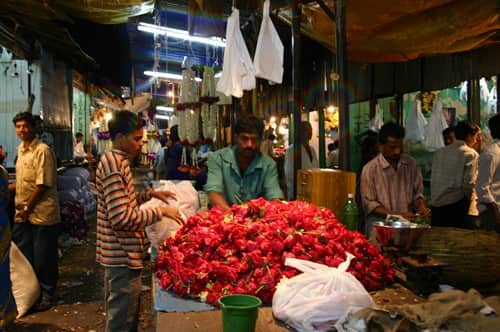
Flowers are the market’s most visually and aromatically striking category. Mysore mallige — the small, intensely fragrant jasmine that is woven into garlands and worn daily in women’s hair across Karnataka — arrives here from early morning in quantities that fill the entrance section of the market with the kind of concentrated jasmine fragrance that is one of Mysore’s most distinctive sensory signatures. Marigolds, roses, lotuses for temple use, and seasonal blooms are sold in loose quantities and pre-strung garlands.
Fresh produce covers the full range of South Indian daily cooking requirements — vegetables including drumstick, plantain flowers, raw banana, bitter gourd, and the varieties of greens specific to Karnataka’s culinary traditions. Coconuts, which are essential to South Indian cooking and ritual, are available in volume. Fruits including mangoes (particularly significant given Mysore’s mango culture), grapes, and seasonal varieties are stocked by the fruit section.
Spices in their most authentic form — whole, freshly ground, or in traditional Mysore-specific blends — are among the most worthwhile purchases for visitors. Sandalwood products carry particular significance here: Mysore has a centuries-old association with sandalwood cultivation and carving, and the market carries sandalwood-based soaps, agarbatti (incense sticks), essential oils, and carved sandalwood items at prices and quality levels that support their purchase as genuinely useful souvenirs rather than tourist trinkets.
Incense, puja accessories, coconut oil, betel leaves arranged in traditional patterns, vermillion powders, and religious items fill the lanes connecting the produce sections. Generations of the same families have operated shops here continuously, maintaining product specialisations and supplier relationships that have built over decades.
Food Near Devaraja Market
The broader Sayyaji Rao Road area carries Mysore’s street food culture — bonda, vada, dosas, and freshly brewed filter coffee from small establishments that have served the market-going population for decades. South Indian coffee in Mysore is genuinely excellent, and stopping for a coffee after a market walk is a standard part of the experience for both locals and visitors.
Nearby Areas Worth Visiting
Mysore Palace is a five-minute walk — one of India’s most spectacular royal residences, open daily and lit brilliantly on Sunday evenings and public holidays. Jaganmohan Palace Art Gallery, housing one of South India’s significant art collections, is in the same zone. Devaraja Urs Road — the main commercial street for clothing and jewellery shopping — runs adjacent to the market area. St. Philomena’s Church, one of India’s largest neo-Gothic churches, is within short auto distance.
FAQs
Q1. What is Devaraja Market Mysore famous for?
Devaraja Market is Mysore’s primary traditional daily market, famous for its vibrant flower section — particularly Mysore mallige (jasmine) — fresh produce, spices, sandalwood products, and incense. It has operated for over a century and reflects Mysore’s cultural and commercial life more authentically than any tourist attraction in the city.
Q2. What are the timings of Devaraja Market Mysore?
The market operates from 6:00 AM to 8:00 PM, Monday through Saturday. It remains closed on Sundays. Morning hours between 7:00 AM and 11:00 AM are the most active and recommended for the best flower selection and produce freshness.
Q3. Is entry to Devaraja Market free?
Yes, entry is completely free. The market is a public space open to everyone.
Q4. What should I buy at Devaraja Market Mysore?
Sandalwood products, Mysore mallige jasmine, local spice blends, fresh coconuts, traditional Mysore incense, and seasonal fruits are the most worthwhile purchases. The jasmine garlands are particularly distinctive to Mysore and travel well for a day or two.
Q5. Can tourists visit Devaraja Market?
Yes, and it is strongly recommended. Many heritage walk operators in Mysore include the market as a standard stop. It offers exceptional photography opportunities, genuine cultural immersion, and the chance to experience daily Mysore life alongside local residents rather than in a tourist-only environment.