A Delhi buyer once discovered, just two weeks before registration, that the resale flat he was about to purchase was leasehold, not freehold, a distinction his broker had never mentioned and one that would have meant seeking a government authority’s permission for every future sale, mortgage, or major renovation. Most buyers in India assume they’re purchasing full, outright ownership of a property. Usually they’re right, but not always, and the difference only becomes obvious at exactly the wrong moment: when applying for a home loan, trying to resell, or opening a lease renewal notice years later. Understanding this single classification before you buy matters considerably more than most property brochures let on.
What Freehold Actually Means
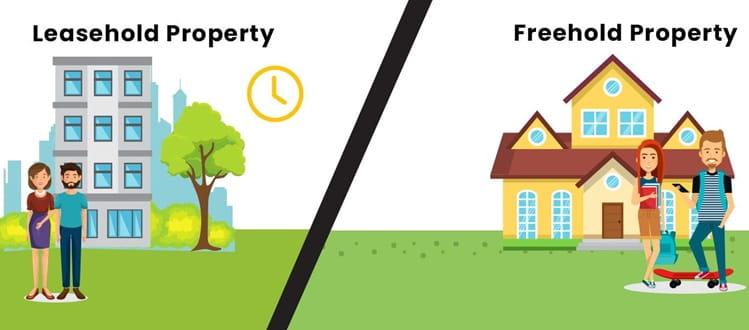
Freehold ownership is the version of property ownership most buyers assume they’re getting by default, and understanding its actual legal scope clarifies exactly what you’re entitled to do without asking anyone’s permission.
- A freehold property gives you complete and permanent ownership of both the land and the building on it, with no expiry date and no ongoing dues owed to any authority for that ownership.
- You can sell, gift, or bequeath a freehold property without requiring approval from any third-party authority, since there’s no lessor sitting above your title in the ownership chain.
- Encumbrance checks on freehold property are also simpler, since the title chain doesn’t involve a separate lessor whose own conditions and consent requirements must be independently verified.
- Freehold title is typically transferred via a registered Sale Deed, which must be registered with the Sub-Registrar’s office under the Registration Act, 1908.
What Leasehold Actually Means
Leasehold ownership looks and feels similar to freehold day-to-day, but it carries a fundamentally different legal structure that only surfaces when you try to do something the lease doesn’t automatically permit.
- A leasehold property means you own the right to occupy and use the building or apartment for a fixed number of years, typically 30, 60, or 99, but you don’t own the land beneath it.
- On a leasehold property, the land continues belonging to the freeholder, commonly a government body like DDA, HSVP, the NOIDA Authority, CIDCO, or in some cases a private institutional lessor.
- Leasehold rights are transferred via a Lease Deed, which for periods exceeding one year must also be formally registered, just like a sale deed, though the underlying legal relationship it creates is genuinely different.
- Once a lease period expires, ownership technically reverts to the freeholder unless the lease is formally renewed, usually by paying a renewal premium and associated legal fees.
Where Each Type of Ownership Is Commonly Found
Knowing which cities and property categories typically carry which classification helps you know exactly where to look more carefully before assuming a property is freehold.
- Leasehold properties are common in government-allotted housing schemes, cantonment areas, and land involving central government estates, DDA flats in Delhi, HSVP plots in Haryana, and NOIDA Authority allotments are frequently structured this way.
- In Karnataka (Bengaluru), most private developer properties are freehold, though properties on BDA (Bangalore Development Authority) land may carry specific title conditions worth checking independently.
- Freehold properties dominate most private developer projects and plotted developments, where the buyer purchases both the structure and the underlying land outright from day one.
- Many leasehold agreements include a renewal clause, allowing the leaseholder to extend for another fixed term, though this typically involves an additional cost and paperwork rather than happening automatically or free of charge.
The Genuine Restrictions That Come With Leasehold
Beyond the basic definitional difference, leasehold ownership carries a set of practical, day-to-day limitations that genuinely affect how you can use and eventually exit the property.
- You own the building, not the land beneath it, a distinction that shapes nearly every other limitation on this list, from renovation approval to resale process.
- Annual ground rent and maintenance or service charges are usually payable to the freeholder throughout the lease period, an ongoing cost freehold owners simply don’t carry.
- Major structural changes require the freeholder’s approval, meaning even significant renovations to your own home may need formal sign-off from the government body or landlord holding the underlying land.
- Transfers, sales, and mortgages often require a No Objection Certificate (NOC) from the freeholder, adding an extra layer of bureaucracy and potential delay to transactions that would be considerably simpler on a freehold property.
- Value erosion is a genuine concern too: as the remaining lease term shortens over the years, market value trends downward, making it progressively harder to exit at a strong price as the lease approaches expiry.
Why Freehold Genuinely Commands a Premium
The practical consequences of these restrictions show up directly in pricing and financing, which is exactly why the two ownership types aren’t treated equally in the market.
- Freehold ownership offers stronger home loan collateral, since banks generally view unrestricted land-and-building ownership as lower risk, often leading to faster approvals and more favourable loan terms compared to a leasehold equivalent.
- Freehold properties typically enjoy quicker capital appreciation and stronger resale demand, driven by the unrestricted ownership structure and the absence of any expiring lease clock ticking in the background.
- Freehold usually commands a higher price than an identical leasehold unit in the same location, precisely because buyers are willing to pay a premium for perpetual, unrestricted ownership, this is exactly why South Delhi’s Defence Colony market, once largely leasehold, moved decisively toward freehold conversion over recent decades.
- Full ownership makes selling, transferring to heirs, and mortgaging considerably easier, since there’s no need to seek a freeholder’s permission or navigate lease-related conditions before completing these transactions.
A Practical Example Worth Understanding
Sometimes the abstract distinction becomes clearest through a concrete comparison, and this scenario illustrates exactly what’s at stake.
- Consider a buyer choosing between two similar 2BHK flats in the same Delhi neighbourhood: Option A is a freehold independent builder floor, and Option B is a leasehold flat with 70 years remaining on its lease.
- The freehold option gives full control and freedom to renovate or transfer rights anytime, without needing anyone’s permission, ideal for a buyer planning to hold the property long-term or pass it to the next generation.
- The leasehold option is typically cheaper upfront, but as the remaining lease term shortens over the years, resale value may fall and banks may grow more cautious about approving loans against it, a real trade-off between short-term savings and long-term flexibility.
The Path From Leasehold to Freehold — And a Genuine 2026 Complication
Many long-standing leaseholders in India have historically been able to convert their properties to freehold, but the process has hit a genuine bureaucratic snag in Delhi specifically that’s worth understanding before assuming conversion is currently straightforward.
- The government has, in many cases, offered freehold conversion to long-standing leaseholders, particularly for DDA-allotted properties in Delhi and certain state government housing schemes, and Delhi, Maharashtra, Haryana, and Uttar Pradesh now offer online conversion portals with reduced paperwork.
- The typical process involves applying to the relevant authority, paying conversion charges based on circle rate and remaining lease period, submitting the lease deed and identity documents, and having the authority issue a Freehold Deed or update land records accordingly.
- The conversion fee can be significant, sometimes running into several lakhs for properties in prime urban locations, and all ground-rent arrears and lessor dues must typically be cleared first, conversion isn’t processed over outstanding dues.
- A genuinely important 2026 update: DDA issued an order effective January 2, 2026, putting fresh freehold conversion applications on hold, citing administrative exigencies pending implementation of revised circle rates. The Union Housing Minister has since confirmed the government’s intent to restore the process, but as of the latest reporting, Delhi buyers and owners remain in a holding pattern, meaning anyone relying on imminent conversion should verify current status directly through DDA’s portal rather than assuming the process is currently open.
Practical Steps Before Buying Either Type
Whichever ownership structure you’re considering, a handful of verification steps genuinely protect you from discovering an unpleasant surprise close to registration day.
- Always verify the specific ownership classification directly in the property documents, sale deed, and allotment letter, rather than assuming based on the developer’s or broker’s marketing language alone.
- Check the remaining lease period carefully if considering a leasehold property, since a lease with only 15-20 years remaining carries meaningfully different risk and financing implications than one with 70+ years left.
- Confirm current freehold conversion charges and status for your specific zone and property type directly on the relevant authority’s portal, since rates and application acceptance can change, as DDA’s 2026 pause clearly demonstrates.
- Factor ground rent and NOC requirements into your long-term cost and flexibility planning if you’re considering a leasehold property, since these ongoing obligations don’t exist for freehold owners.
The Bottom Line
Freehold and leasehold represent two genuinely different ownership structures with real, lasting consequences, freehold gives you perpetual, unrestricted ownership of both land and building with stronger financing terms and easier resale, while leasehold means owning the structure for a fixed period on land that ultimately belongs to someone else, carrying ongoing ground rent, renewal uncertainty, and NOC requirements for major transactions. Given how significantly this classification affects your home loan eligibility, resale flexibility, and long-term security, verifying the exact ownership status directly in the property documents, and checking your specific authority’s current conversion policies, remains genuinely essential before committing to either type of purchase. This is general informational content, not personalised legal or financial advice; consulting a property lawyer to review the specific lease deed or title documents remains genuinely worthwhile before finalizing any real estate transaction.
Frequently Asked Questions
Q1. Can I currently apply to convert my DDA leasehold flat to freehold in 2026?
A: As of DDA’s January 2, 2026 order, fresh applications for freehold conversion were put on hold citing administrative exigencies pending revised circle rates, and while the Union Housing Minister has confirmed intent to restore the process, it’s essential to check the current status directly on DDA’s portal before assuming your application will be accepted.
Q2. Does owning a leasehold property genuinely affect my ability to get a home loan?
A: Yes, banks generally view freehold properties as stronger collateral given the unrestricted ownership, often resulting in faster approvals and more favourable terms, while leasehold properties, particularly those with a shorter remaining lease period, may face more scrutiny or slightly less favourable loan conditions from some lenders.
Q3. What happens if I don’t renew my lease before it expires on a leasehold property?
A: If the lease isn’t renewed, ownership of the property technically reverts to the freeholder, whether that’s a government body or private lessor, which is exactly why checking the remaining lease period carefully and understanding the renewal process and associated costs matters considerably before purchasing any leasehold property.
Q4. Is it worth paying extra for a freehold property over an equivalent leasehold one in the same location?
A: In most cases yes, since freehold ownership typically offers stronger long-term appreciation, easier resale without needing a freeholder’s NOC, and better home loan terms, though this calculation can shift if the leasehold property sits in a genuinely prime location with no freehold equivalent available, or if your usage horizon is short enough that the perpetual ownership benefit matters less to you personally.