Scroll through Swiggy or Zomato on any given evening, and you’ll spot dozens of listings that don’t correspond to any actual restaurant you’ve ever walked past, just a name, a menu, and a delivery estimate. That’s a cloud kitchen, and thousands of Indian entrepreneurs jumped into this business believing low overhead automatically meant easy profit. Here’s the uncomfortable truth nobody tells you upfront: roughly 25 to 30% of cloud kitchens in India shut down before completing their first year, not because demand was missing, but because the arithmetic behind aggregator commissions caught them off guard.
This genuinely matters if you’re considering starting one in 2026, because the business model itself remains sound, India’s online food delivery market has crossed $12.3 billion, and demand keeps climbing. But whether you personally turn a profit depends far less on how good your biryani tastes and considerably more on how carefully you understand the numbers sitting quietly behind every order that lands on your kitchen’s screen.
What Genuine Profit Margins Actually Look Like
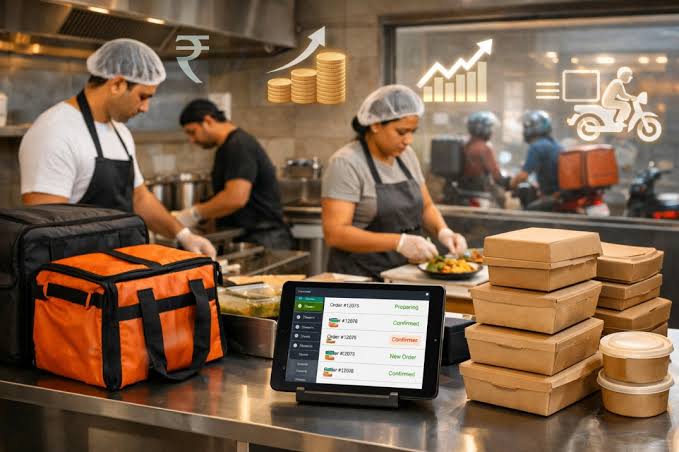
A well-managed cloud kitchen in India typically operates on gross margins between 20% and 40%, genuinely healthy compared to the 5 to 15% margins traditional dine-in restaurants often settle for. This advantage comes directly from what you’re not paying for, no dining space rent, no waitstaff, no interior décor, just a functional kitchen built purely for cooking and packing.
But gross margin isn’t the number that determines whether you survive. A kitchen generating ₹3 lakh in monthly revenue, with total costs around ₹2.2 lakh covering food, rent, packaging, staff, and commissions, nets roughly ₹80,000 a month, a solid return on a setup that likely cost ₹3 to 5 lakh to establish. That net figure, not the headline margin percentage, is what genuinely tells you whether this business makes sense for your specific situation.
The Commission Line That Quietly Determines Survival
This is genuinely the single most important number to understand before starting. Swiggy typically takes 18 to 25% per order, while Zomato sits anywhere between 15 and 30%, depending on your city and whatever specific deal your account manager negotiated. A kitchen pushing ₹4 lakh through these platforms hands over ₹60,000 to ₹1,20,000 before paying rent, staff, or the gas bill.
This isn’t a minor operating cost, it’s genuinely the difference between a thriving kitchen and one quietly bleeding money while appearing busy. On a ₹300 order, the aggregator might keep ₹60 to ₹90 before you’ve even accounted for whatever discount you funded to win that order in the first place. Understanding this upfront, rather than discovering it on your second month’s profit and loss statement, genuinely changes how you plan your entire business.
Building a Direct Ordering Channel Genuinely Recovers Margin
Smart operators have figured out exactly how to counter this commission bleed, and it’s worth understanding their approach. One kitchen owner started collecting customer phone numbers from day one, building a WhatsApp broadcast list that eventually reached 1,800 numbers, with roughly 22% of orders now flowing through a direct link rather than the aggregator apps.
The math here is genuinely compelling. A direct order typically costs just 4 to 6% in payment gateway and delivery charges, compared to the 22 to 25% aggregators take. For a kitchen doing ₹5 lakh monthly, shifting even ₹1 lakh worth of orders to direct channels saves ₹16,000 to ₹20,000 every single month, adding up to nearly ₹2 lakh over a year sitting in your bank account rather than in the aggregator’s revenue report. Building this direct channel early, rather than treating it as an afterthought once you’re already struggling, genuinely determines long-term survival more than almost any other single decision.
What It Actually Costs to Get Started
Setting up a cloud kitchen in India typically requires an investment between ₹3 lakh and ₹15 lakh, depending heavily on whether you’re sharing a commercial kitchen space or building your own from scratch. This covers cooking equipment, exhaust systems, storage, packaging supplies, and the mandatory licensing, FSSAI registration, GST, a trade license, and fire safety certification, none of which are optional shortcuts you can skip to save time.
Most well-run kitchens genuinely reach break-even within 6 to 12 months, assuming order volume stays consistent and costs remain under control. This timeline genuinely depends on choosing a focused menu rather than trying to serve everything, biryani, healthy meals, or a specific regional cuisine executed consistently well outperforms a sprawling menu that stretches your kitchen’s efficiency thin.
Where the Real Money Genuinely Gets Lost
Beyond commissions, a few cost categories quietly determine whether your margins survive. Packaging typically runs 5 to 8% of order value, and skimping here to save a few rupees genuinely backfires when food arrives cold or spilled, damaging your ratings and future order volume. Staff salaries, even for a lean cloud kitchen team, typically run ₹50,000 to ₹1,50,000 monthly depending on your order volume and city.
Relying entirely on Zomato and Swiggy for discoverability also carries a genuine strategic risk beyond just commission cost, you don’t own your customer relationship, and a sudden commission hike or an algorithm change affecting your ranking can genuinely halve your revenue overnight without warning. This is precisely why the operators still thriving after 18 months typically invested early in their own ordering channel rather than treating aggregators as their entire business.
Frequently Asked Questions
Q1. Is cloud kitchen still a good business to start in 2026, given how many shut down within their first year?
Yes, genuinely, provided you go in understanding the real cost structure upfront rather than assuming low overhead automatically means easy profit. Kitchens that survive typically do the commission arithmetic before launching, not after their first disappointing month, and build a direct ordering channel early rather than relying entirely on aggregators.
Q2. How much of my revenue should I realistically expect to lose to Swiggy and Zomato commissions?
Budget for 18 to 30% depending on your specific platform agreement and city, and treat this as a fixed cost you must price around from day one rather than a surprise deduction you discover later, since underestimating this single line item is the most common reason new cloud kitchens fail.
Q3. Should I focus on a wide menu to attract more customers, or stick to one specific category?
Stick to one focused category with consistent demand, biryani, fast food, or healthy meals, rather than spreading across many cuisines. A focused menu genuinely improves kitchen efficiency, reduces food waste, and builds the kind of consistent quality that drives repeat orders and better platform rankings.
Q4. How long does it typically take a new cloud kitchen to break even in India?
Most well-managed cloud kitchens reach break-even within 6 to 12 months, assuming steady order volume and disciplined cost management, though this timeline stretches considerably if you’re overspending on unnecessary setup elements or haven’t yet built a direct customer channel to offset aggregator commissions.