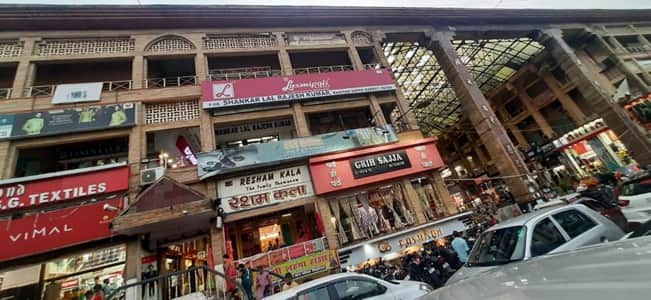
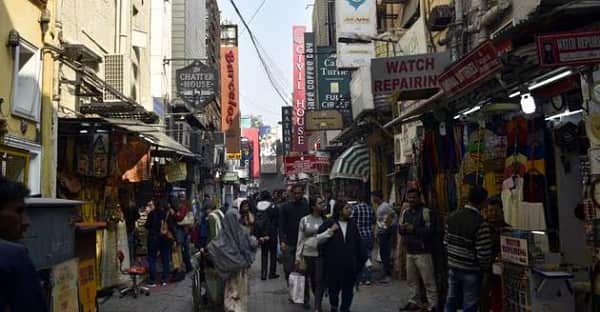
The name is a known source of confusion. Bengali Market in Delhi has no connection to West Bengal. It was named after Bangali Mal Lohia, a businessman who developed this small circular market in 1930 on Todarmal Road near Mandi House in central New Delhi. What he built — a compact, semi-circular cluster of shops anchored around a central roundabout — has somehow survived nearly a century of Delhi’s commercial evolution without becoming either a heritage monument or a mall, retaining instead the particular character of a neighbourhood market that punches well above its size in reputation.
Bengali Market is not famous for what it sells in any wholesale or volume sense. It is famous for what it feeds. The chhole bhature here, the gol gappas, the chaat, the rasgullas, and the mithai from Nathu’s Sweets — these are the reasons people cross Delhi to visit a market that occupies roughly one city block.
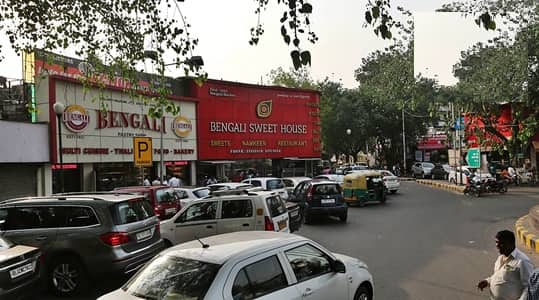
Quick Overview: Bengali Market Delhi
| Detail | Information |
| Location | Todarmal Road, near Mandi House, Central New Delhi – 110001 |
| Area | Central Delhi, Lutyens’ zone |
| Built | 1930 by Bangali Mal Lohia |
| Market Type | Compact neighbourhood retail and food market |
| Timings | 10:00 AM – 10:00 PM (Monday to Saturday) |
| Weekly Off | Sunday |
| Nearest Metro | Mandi House Station, Blue and Violet Lines (~5 min walk) |
| Known For | Chhole bhature, chaat, mithai — particularly Nathu’s Sweets and Bengali Sweet House |
| Parking | Very limited; metro strongly recommended |
Where Exactly Is Bengali Market
Bengali Market is located on Todarmal Road, adjacent to Mandi House in Central New Delhi, pin code 110001. Mandi House Metro Station on the Blue and Violet Lines is less than a five-minute walk from the market entrance, making this one of the most metro-accessible markets in the entire Lutyens’ zone. DTC buses stop at Kasturba Gandhi Marg Crossing and Mandi House, both immediately nearby. Tilak Bridge and Shivaji Bridge railway stations are within 2 km. Connaught Place is a short walk to the west. India Gate is visible in the distance from the market’s eastern side on a clear day.
The market’s physical layout is intentionally small — a handful of shops arranged around a central circle, with the food establishments dominating the frontage and daily-need shops filling the remaining units. It was originally designed as a neighbourhood convenience market for the government colony residents of Lutyens’ Delhi, and that residential character has never fully departed even as the area has become a cultural and institutional hub.
What Shops You Will Find
Food is what Bengali Market is built around, and the distinction between its commercial and culinary offerings is somewhat academic since most of the significant establishments here are either sweet shops or food counters.
Nathu’s Sweets holds the dominant position — an institution that has been operating from this market for decades and is credited with some of the most consistently good North Indian mithai in central Delhi. Sandesh, rasgullas, laddoos, and seasonal specialties fill the display cases. Bengali Sweet House runs a parallel reputation in the same category, and the competition between the two has historically kept quality high at both.
The chhole bhature served in and around the market are among the most cited in central Delhi — a bold claim in a city where this dish inspires strong opinions, but one that has been repeated consistently enough by food writers, residents, and office workers from the surrounding area to carry weight. Gol gappas, aloo tikki, and papdi chaat draw steady queues through the evening hours at the pavement stalls and counter shops around the circle.
Beyond food, Bengali Market carries pharmacies, bakeries, small boutiques, stationery shops, and daily-need stores that serve the residential population of the immediate neighbourhood. These are practical rather than destination shopping. The market’s proximity to the National School of Drama has made it an informal gathering point for theatre students and practitioners who pass through between rehearsals — a regular audience at the chaat stalls who add an artistic edge to what is otherwise a government-colony neighbourhood market.
Nearby Areas Worth Visiting
Mandi House itself — the cultural hub named after the erstwhile residence of the Mandi royal family — hosts the National School of Drama, Sahitya Kala Akademi, Sangeet Natak Akademi, and several performance venues that regularly present theatre, dance, and music. Visitors who combine Bengali Market food with an evening performance at one of the Mandi House venues experience two very different but equally authentic sides of central Delhi’s culture. Connaught Place is a 10-minute walk. The National Museum and India Gate are in the same broad zone. Barakhamba Road and Kasturba Gandhi Marg connect into the commercial and institutional heart of New Delhi.
FAQs
Q1. What is Bengali Market Delhi famous for?
Bengali Market is best known as one of Delhi’s most celebrated food destinations — chhole bhature, chaat, gol gappas, and mithai from Nathu’s Sweets and Bengali Sweet House. It is also notable as one of central Delhi’s oldest planned markets, built in 1930, with the name deriving from its founder Bangali Mal Lohia rather than any connection to West Bengal.
Q2. What are the timings of Bengali Market Delhi?
The market operates from 10:00 AM to 10:00 PM, Monday through Saturday. It remains closed on Sundays. Peak hours are evenings from 6:00 PM onwards, particularly on weekdays when the nearby institutional crowd finishes work.
Q3. Which metro station is nearest to Bengali Market Delhi?
Mandi House Metro Station on the Blue and Violet Lines is the closest, less than a five-minute walk from the market. This is strongly recommended over driving given the severe parking constraints in this part of central Delhi.
Q4. Is Bengali Market good for general shopping?
Not primarily. Bengali Market’s scale is too small for comprehensive shopping. It offers pharmacies, bakeries, and daily-need stores for residents, but visitors come almost entirely for the food. Connaught Place nearby is the better destination for retail shopping in this part of Delhi.
Q5. Why is it called Bengali Market if it has nothing to do with Bengal?
The market was built in 1930 by Bangali Mal Lohia, a prominent Delhi businessman. Its original name was “Bengali Mal Market,” which over decades was shortened by common usage to “Bengali Market.” The confusion with West Bengal is understandable but incorrect — the name is entirely a personal reference to its founder.