Mumbai’s southernmost tip carries a concentrated version of everything that makes the city remarkable. Within a few hundred metres of each other in Colaba, you will find the Taj Mahal Palace Hotel and fishermen drying their nets, Gothic colonial-era architecture and pavement vendors, heritage bars that have survived a century and boutiques that opened last season. The commercial spine running through this zone is Colaba Causeway — officially Shaheed Bhagat Singh Road — a street that connects Colaba with what was historically called Old Woman’s Island and functions today as South Mumbai’s most vibrant, most photographed, and most democratically priced shopping street.
The causeway’s name is literal: it was built as a raised road across what was originally tidal flat, linking two land masses. Its Victorian-era buildings now provide a backdrop to one of India’s most famous street markets, where pavement stalls, independent boutiques, antique shops, and heritage restaurants occupy the same geography in a way that no urban planner could have deliberately designed.
Quick Overview: Colaba Causeway Market Mumbai
| Detail | Information |
| Official Name | Shaheed Bhagat Singh Road (Colaba Causeway) |
| Location | Colaba Causeway, Colaba, Mumbai, Maharashtra – 400005 |
| Area | Colaba, South Mumbai |
| Distance from CST | ~3 km |
| Market Type | Open street market — pavement stalls + boutiques + antique shops |
| Timings | 10:00 AM – 10:00 PM (all 7 days) |
| Weekly Off | None |
| Entry Fee | None |
| Nearest Railway | Churchgate Station, Western Line (~2 km by taxi) |
| Nearest Metro | Vidhan Bhavan Station, Mumbai Metro Line 3 |
| Known For | Fashion accessories, jewellery, antiques, leather goods, clothing, books, souvenirs |
| Transport in Area | Taxis and cabs only (no autos in South Mumbai) |
Where Exactly Is Colaba Causeway Market
Colaba Causeway runs through the Colaba neighbourhood of South Mumbai, between the Gateway of India zone on its northern end and the Cuffe Parade residential area further south, pin code 400005. The street is part of the Fort area’s southern extension and is positioned close to some of Mumbai’s most historically significant addresses — the Gateway of India and the Taj Mahal Palace & Tower are at the northern end, while the Navy Nagar and Cuffe Parade diplomatic zone lies to the south.
Churchgate Station on the Western Line is the nearest suburban railway station, approximately 2 km away — taxis cover the distance in 10 to 15 minutes. Mumbai Metro Line 3 (Aqua Line, fully operational from 2024-25) provides the most convenient new transit connection via the Vidhan Bhavan Metro Station, from which Colaba is accessible. BEST buses on routes 103, 125, 51, 83, and A-124 stop at Regal Cinema Colaba, a two-minute walk from the market. Auto-rickshaws do not operate in South Mumbai; taxis (kaali-peeli), Uber, Ola, and Rapido are the road transport options.
Parking in Colaba is limited and expensive. Cab or metro access is the practical approach for most visitors.
What Shops You Will Find
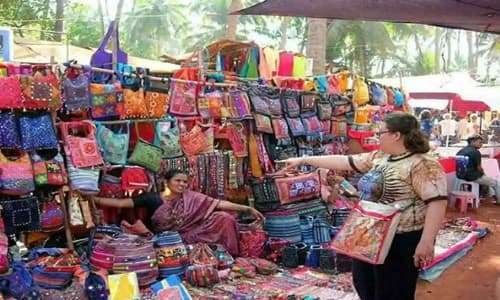
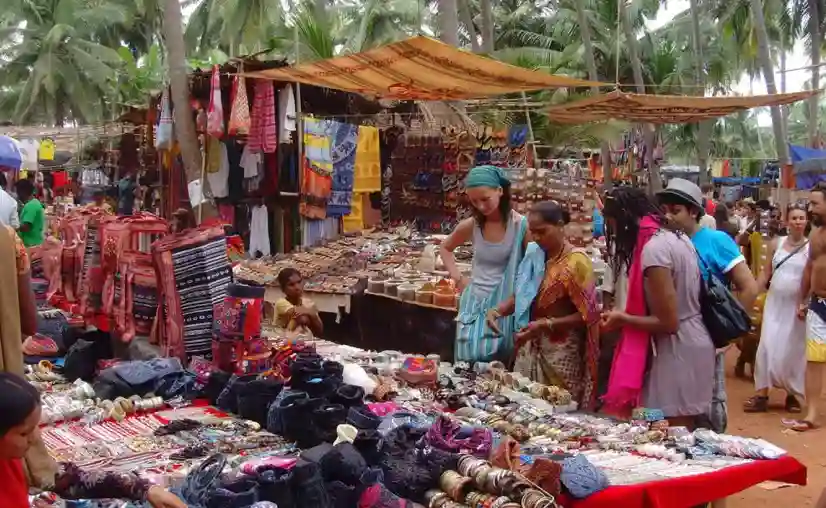
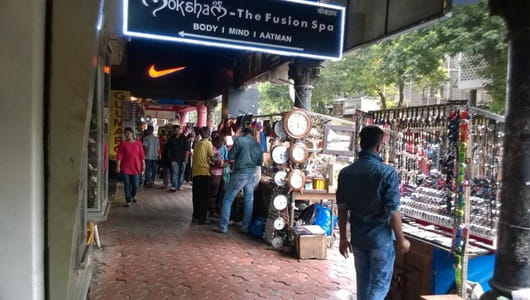
Fashion accessories are the category that gives Colaba Causeway its identity among first-time visitors. Pavement stalls stretch continuously along both sides of the street, carrying junk jewellery — oxidised silver-finish earrings, chunky necklaces, layered beaded pieces, tribal-inspired bangles — alongside bags, wallet clutches, hair accessories, sunglasses, and the full range of budget fashion accessories at prices that reward bargaining. Opening asks are typically 50 to 100 percent above the realistic purchase price; patient negotiation usually brings them down substantially.
Clothing stalls carry bohemian cotton tops, flowy dresses, export surplus pieces, and casual western wear at prices considerably below organised retail. Boutiques within the market’s buildings carry more curated collections — independent designers with handwoven and handprinted textiles, resort wear influenced by Colaba’s tourist-facing character, and statement pieces that reflect a more considered aesthetic than the pavement stalls.
Antiques and vintage goods are one of Colaba Causeway’s most distinctive offerings. Shops dealing in brassware, crystals, old silverware, vintage maps and prints, Buddhist and Hindu religious artefacts, and the kind of curio objects that take time to properly examine occupy permanent shop units away from the pavement stalls. These shops serve serious collectors and curious browsers equally, and the mix of genuine antiques and reproduction pieces requires some discernment. Books — both new and second-hand — are available from a long-established pavement book stall that has been operating on the causeway for decades.
Leather goods, shoes, sandals, and handcrafted footwear are available from dedicated vendors. Crystals, incense, Tibetan jewellery, and spiritual goods have a strong presence reflecting Colaba’s connection to the international travel circuit that passes through this part of South Mumbai.
Food at Colaba Causeway
The food on and around Colaba Causeway is as well-known as the shopping. Café Leopold — the colonial-era restaurant and bar that achieved international literary fame through Gregory David Roberts’ novel Shantaram and greater notoriety through the 26/11 attacks — is one of the market’s anchoring dining institutions. Café Mondegar, famous for the wall mural cartoons designed by the late cartoonist Mario Miranda, occupies another historic corner. Both are crowded with international tourists and locals in roughly equal measure. The causeway also has McDonald’s, Café Coffee Day, and various standalone restaurants along its length. Street food — kebabs, sandwiches, and chaat — is available from pavement vendors through the day and into the evening.
Nearby Areas Worth Visiting
The Gateway of India — the basalt arch monument built in 1924 to commemorate the visit of King George V and now one of Mumbai’s most visited landmarks — is a short walk from the northern end of the market. Ferry services to Elephanta Island (UNESCO World Heritage Site with rock-cut Shiva caves) and Alibaug depart from the Gateway of India jetty. The National Gallery of Modern Art and the Chhatrapati Shivaji Maharaj Vastu Sangrahalaya (Prince of Wales Museum) are both in the Colaba-Fort zone.
FAQs
Q1. What is Colaba Causeway Market Mumbai famous for?
Colaba Causeway is Mumbai’s most iconic street shopping destination, famous for fashion accessories, jewellery, bohemian clothing, antiques, leather goods, books, and souvenirs. Located near the Gateway of India, it combines street shopping with heritage cafés like Leopold and Mondegar and is known internationally through Gregory David Roberts’ novel Shantaram.
Q2. What are the timings of Colaba Causeway Market?
Pavement stalls operate from approximately 10:00 AM to 10:00 PM, all seven days. There is no weekly off and no entry fee. Earlier arrivals (before noon on weekdays) find the stalls less crowded and sellers more willing to negotiate.
Q3. How do I reach Colaba Causeway Market?
Churchgate Station (Western Line, ~2 km by taxi) is the nearest suburban rail point. Mumbai Metro Line 3’s Vidhan Bhavan Station provides metro access. BEST buses stop at Regal Cinema Colaba, a two-minute walk from the market. Auto-rickshaws do not operate in South Mumbai; taxis and app-based cabs are the road options.
Q4. Is bargaining expected at Colaba Causeway?
Yes, across all pavement stalls and most independent shops. Opening prices are quoted significantly above realistic sale prices. For jewellery and accessories, countering at 40 to 60 percent below the opening ask and working toward a middle point is the standard approach. Fixed-price boutiques exist but are a minority.
Q5. What is the best time to visit Colaba Causeway Market?
November to February for the most comfortable weather. Weekday mornings from 11:00 AM are best for uncrowded browsing. Evenings from 6:00 PM are the most energetic period but also the most crowded. The monsoon months (June to September) see reduced stall activity during heavy rain.