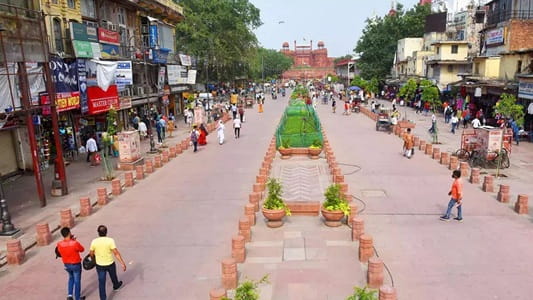
Delhi’s oldest market was built by a Mughal emperor and named by his daughter. Shah Jahan laid out Chandni Chowk in the seventeenth century as the principal commercial artery of Shahjahanabad — the walled city he built to be the new imperial capital. The name came from a pool at the centre of the street that reflected the moonlight, giving it the character of a moonlit square, a chandni chowk. The pool is long gone. The emperors are long gone. The market has not stopped trading for a single day in nearly four hundred years, which makes it not merely a shopping destination but one of the world’s longest-running commercial institutions.
Today, Chandni Chowk is a two-kilometre stretch running west from the Red Fort toward the Fatehpuri Mosque, flanked by a network of specialised lanes where wholesale textile dealers, jewellers, spice merchants, booksellers, and food vendors occupy the same urban geography their predecessors did generations ago. It is loud, layered, chaotic, and genuinely irreplaceable.
Quick Overview: Chandni Chowk Market Delhi
| Detail | Information |
| Location | Chandni Chowk Road, Chandni Chowk, Old Delhi – 110006 |
| Established | 17th century (Mughal emperor Shah Jahan, c. 1650) |
| Area | Old Delhi / Shahjahanbad |
| Market Type | Historic wholesale and retail bazaar — multiple specialised lanes |
| Timings | 10:00 AM – 8:00 PM (Tuesday to Sunday) |
| Weekly Off | Monday (most shops) |
| Nearest Metro | Chandni Chowk Station, Yellow Line (direct at market entrance) |
| Entry Fee | None |
| Key Lanes | Dariba Kalan, Kinari Bazaar, Khari Baoli, Nai Sarak, Katra Neel, Bhagirath Palace |
| Known For | Silver jewellery, wedding trims, spices, textiles, books, lighting, street food |
Where Exactly Is Chandni Chowk
Chandni Chowk runs along Chandni Chowk Road in Old Delhi, beginning at the Red Fort on the eastern end and extending westward to the Fatehpuri Mosque, pin code 110006. The street has been the commercial spine of the walled city for nearly four centuries, and its surrounding lanes — each with their own commercial specialisation — spread outward into the historic neighbourhood of Shahjahanabad.
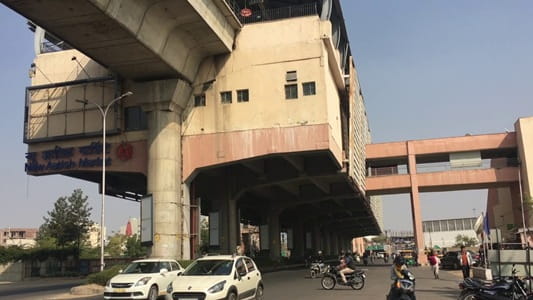
Chandni Chowk Metro Station on the Yellow Line deposits visitors directly at the market’s entrance — one of the most convenient metro-to-market connections in the city. The station is elevated, with exit gates onto the main Chandni Chowk road. From the station, the full market stretches both east (toward the Red Fort) and west (toward Fatehpuri). The area is also served by DTC bus routes from across Delhi. Auto-rickshaws and cycle-rickshaws navigate the narrower lanes within the market, though much of the exploration is best done on foot. Parking for private vehicles is available at multi-level car parks at the periphery, but driving into the inner lanes during market hours is inadvisable and largely impractical.
The best approach: metro to Chandni Chowk, walk the main street, and take cycle-rickshaws between the lanes that extend off the main road.
What Shops and Lanes You Will Find
Chandni Chowk’s commercial structure is organised by lane, each of which has developed a specialisation over centuries. Dariba Kalan is the silver jewellery lane — one of Delhi’s oldest jewellery markets, dealing in silver jewellery, imitation ornaments, precious stones, and traditional silver craft. Kinari Bazaar handles the wedding trimming trade: zari borders, lace, tassels, ribbon, embroidered patches, and the full range of decorative trims used in bridal wear and wedding décor. This lane is indispensable for anyone involved in wedding garment production or bridal shopping.
Khari Baoli, branching off the western end of Chandni Chowk near Fatehpuri, is Asia’s largest spice market — a dense, aromatic lane where sacks of dried chillies, turmeric, coriander, fenugreek, star anise, cloves, and hundreds of other spices and dry goods line every shop. The scale and variety dwarf anything available in organised supermarkets. Nai Sarak is the books and stationery market — academic texts, competitive exam books, stationery in wholesale quantities, and general publishing at prices that make it a destination for students and institutions across Delhi.
Katra Neel handles textiles and fabrics — colourful cloth by the metre, printed fabrics, dress materials, and wholesale apparel sourcing for retailers from across North India. Bhagirath Palace, toward the eastern end of the market, is the largest electrical goods and lighting market in North India, covering everything from simple electrical fittings to elaborate decorative chandeliers and festival lighting.
Beyond the lanes, the main Chandni Chowk street itself carries sarees, lehengas, sherwanis, and traditional Indian wear from shops that have served generations of customers. The market also has significant Jain temple and Gurudwara heritage woven into its commercial fabric — the Gauri Shankar Temple, Sisganj Gurudwara, and the Jain Shvetambara Temple are all within the market zone.
Food at Chandni Chowk
The food is as historic as the market. Paranthe Wali Gali — a narrow lane off the main street — has been serving stuffed paranthas since the nineteenth century. Old Famous Jalebi Wala near the Fatehpuri end makes jalebis in the continuous frying tradition that has operated from the same location for well over a century. Natraj Dahi Bhalla serves the most well-known dahi bhalla in Old Delhi. Daulat ki Chaat, available only in winter mornings, is a whipped cream and saffron confection that exists nowhere else in the world. Karim’s, just off the market near the Jama Masjid, is one of Delhi’s most historic kebab restaurants.
Nearby Areas Worth Visiting
Red Fort — Shah Jahan’s imperial citadel and a UNESCO World Heritage Site — is at the eastern end of the market street. Jama Masjid, one of India’s largest mosques, is a five-minute walk from the market’s interior. The old havelis of Shahjahanabad, including the Haveli Dharampura restoration project, are accessible from the market lanes.
FAQs
Q1. What is Chandni Chowk Market Delhi famous for?
Chandni Chowk is Delhi’s oldest and most historic market, built in the seventeenth century during the Mughal era. It is famous for its specialised lanes — silver jewellery at Dariba Kalan, wedding trims at Kinari Bazaar, Asia’s largest spice market at Khari Baoli, books at Nai Sarak, electrical goods at Bhagirath Palace — alongside its legendary street food including Paranthe Wali Gali, Old Famous Jalebi Wala, and Daulat ki Chaat.
Q2. What are the timings of Chandni Chowk Market?
Most shops operate from 10:00 AM to 8:00 PM, Tuesday through Sunday. Monday is the primary weekly off day. Weekday morning visits — arriving before noon — offer the most relaxed experience. Weekends and festival periods (particularly pre-Diwali and pre-wedding season in October to February) are most crowded.
Q3. Which metro station is nearest to Chandni Chowk Market?
Chandni Chowk Metro Station on the Yellow Line is directly at the market entrance. The station deposits visitors onto the main market street within a minute of exiting.
Q4. Is Chandni Chowk good for wholesale shopping?
Yes. Many of its lanes — Khari Baoli for spices, Katra Neel for textiles, Kinari Bazaar for trims — operate primarily as wholesale markets that also serve retail buyers. The pricing at most shops reflects wholesale sourcing rather than retail mark-up, making it extremely competitive for bulk and individual buyers alike.
Q5. What is the best time to visit Chandni Chowk?
Weekday mornings between 10:00 AM and 1:00 PM for the most manageable crowds and full shop availability. Winter months from October to March offer the most comfortable weather for walking the lanes. Avoid Monday, when most shops are closed, and avoid festival evenings unless the festive atmosphere itself is the point of the visit.